Archive for the ‘Tax Mitigation’ Category

In the last two days I have been doing tax loss harvesting for my clients.
According to Google,
Tax loss harvesting is the practice of selling a security that has experienced a loss. By realizing, or “harvesting” a loss, investors are able to offset taxes on both gains and income. The sold security is replaced by a similar one, maintaining the optimal asset allocation and expected returns.
That sounds simple enough, but actually I learned a few things doing tax loss harvest. 1) You can make money and still claim a tax loss. 2) The difference between TTM Yield vs 30 Day SEC Yield and how to use them to select a bond fund.
Take one high net worth client for example, he has about $500k of DWFIX, an international bond fund. I sold that to realize a $31k loss that he can use for tax deductions. But during the three years that the position was in his portfolio, it generated more than $100k in incomes. So he makes money in this position but still gets to claim a tax loss. How nice!
Share this:

Year End Moves for Tax Savings
Posted on: December 4, 2014
 As 2014 draws to a close, my wife and I have sprung into action to save on our 2014 taxes. Here are a few things we do. We are no CPAs, so what we do is pretty easy to mimic.
Donate all the garbage. I couldn’t believe how many items in my household we literally didn’t touch, not even once, in the whole of 2014. Things like that are immediate candidates for donation. Things that fall into this category could be electronics, furniture, books, clothes, kitchenware, bedroom sets, used toothbrushes, etc. Ok, maybe not used toothbrushes, but just about anything you don’t use, you can find a better home for, and get a tax deduction for doing so. In some years, we’ve gotten $10,000 worth of deductions. Read the rest of this entry »
Share this:

On March 19th of this year, the Maryland legislature approved a bill that would raise Maryland’s current state estate tax exemption from its current $1 million leve. The Maryland legislation, which is expected to be signed shortly by Governor Martin O’Malley but as of today it is still awaiting his signature would eventually raise the Maryland state exemption level to the federal estate exemption level.
Currently, assets forming part of a Marylander’s estate upon his or her death in excess of the $1 million threshold would be subject to astate-imposed estate tax this year. Unlike the 2014, federal estate tax exemption amount of $5.34 million. The Maryland legislation provides for the estate tax threshold to continue to rise until it is aligned with the federal estate tax exemption in the year 2019. In 2015, the threshold will be $1.5 million; in 2016, $2 million; in 2017, $3 million; in 2018, 4 million; and finally, in 2019, an amount equal to the federal threshold (which is projected to be $5.9 million in that year once it is adjusted for inflation).
Share this:

Despite higher tax rates, S corporations retain advantages over C corporations
Posted on: February 10, 2014
(I got this from Cal Klausner, a CPA friend of mine.)
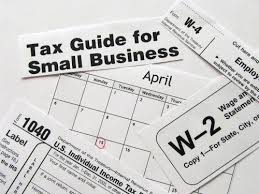 After recent tax changes, owners of small businesses face a question: Should the business continue to function as an S corporation, or should the entity revoke its election under Subchapter S of the Code?
Despite a number of statutory constraints, conventional wisdom has generally favored an S corporation classification. An S corporation is a pass-through entity whose shareholders are subject to personal income tax based on the income of the corporation. A C corporation, by contrast, is taxed as a separate entity at corporate rates, and its distributions to shareholders are subject to the personal income tax. A small business corporation electing under Subchapter S may have no more than 100 shareholders, and may not have more than one class of stock. There are no similar constraints on C corporations. Nevertheless, an S corporation classification provides business owners a superior degree of flexibility and is therefore generally preferred. Specifically, by having its income flow directly to its shareholders, an S corporation is not subject to the double taxation that a C corporation may be unable to avoid.
Share this:


Captive Insurance
I went to a conference for CPAs last week, and my biggest takeaway was a concept called captive insurance.
This is the concept of a business owner setting up an insurance company to insure the risk of his/her own business. Thus the name captive.
But what’s in it for one to have one’s own insurance company?
Tax Mitigation
It turns out that Congress has created legislation to encourage captive insurance – some would call that a tax loophole. IRC 831(b) states that small insurance companies ($1.2m or less in annual premium income) pay tax only on investment incomes. In other words, they don’t pay tax on premium income.
Can you see the tax loophole here? If a business pays its captive insurance company $1.2m in insurance premiums, the premium is deductible to the business and yet tax exempt to the captive insurance company. Depending on the tax structure of the business, this could mean a tax saving of 40% to 70%.
But tax savings aren’t the only major benefit!
Firm | Youtube | Facebook | Twitter | LinkedIn | Newsletter
Share this:


Tax planning tips
In the past, I have advised my clients to defer income recognition and capital gain realization so that they can pay taxes later. Not this year! Under current law, major tax changes are set to happen at the end of the year. These include:
- Tax rates on ordinary income will rise. The rates for most brackets will increase by 3%. The highest top marginal tax rate (which was for income above $388,350 for both single and married filing joint filers in 2012) will go from 35.0% (in 2012) to 39.6% (in 2013).
Share this:

Tax planning tips
This is an excerpt from an IRS question and answer article about the Additional Medicare Tax, which goes into effect in 2013. The full article can be viewed at the IRS website.
The following questions and answers provide employers and payroll service providers information that will help them as they prepare to implement Additional Medicare Tax which goes into effect in 2013. Additional Medicare Tax applies to individuals’ wages, other compensation, and self-employment income over certain thresholds; employers are responsible for withholding the tax on wages and other compensation in certain circumstances. The IRS has prepared these questions and answers to assist employers and payroll service providers in adapting systems and processes that may be impacted.
1. When does Additional Medicare Tax start?
Additional Medicare Tax applies to wages and compensation above a threshold amount received after December 31, 2012 and to self-employment income above a threshold amount received in taxable years beginning after December 31, 2012. Read the rest of this entry »
Share this:


Be prepared for a tax cut sunset
(This is an article I submitted to Physicians Practice magazine, an edited version was published.)
With President Obama re-election, there is now no doubt that the Bush tax cuts will expire come January 1st, 2013.
Why is there a sunset clause in President Bush’s tax cuts?
In 2001 and 2003, Congress passed, and President Bush signed into law, significant tax reductions for nearly all taxpayers. These cuts included marginal rate reductions, the introduction of a new 10% tax bracket, an expansion of the child tax credit, and a variety of other provisions. Both bills were passed using a Senate procedure known as “reconciliation” – a tactic that lowers the threshold for cloture to a simple majority of senators (as opposed to a 60-vote supermajority).
Share this:


FSA: It’s all about flexibility
Flexible Spending Accounts (FSAs) are benefits offered by some employers. Money put in the accounts is exempted from income tax, payroll tax, and in most cases state and local taxes.
There are generally two types of FSA: health care FSA and dependent care FSA. As the names imply, money in a health (dependent) care FSA can only be used towards eligible health (dependent) care expenses.
Take my wife as an example; she put $2,000 into her health FSA and another $5,000 into her dependent care FSA. Since we are in the highest tax bracket and we live in a high tax state, the total tax saving is close to $3,500, or 50%.
Share this:

Potential Changes to Estate and Gift Rules May Result in Severe 2013 Tax Consequences: My Read
Posted on: July 21, 2012

Estate planning
I received a marketing piece from a major CPA firm this morning. Let me tell you what I think about its key points.
Due to the expiration of certain tax provisions, 2012 may be the last year that taxpayers will be able to utilize the gift and estate tax exemption under the Temporary Tax Relief Act of 2010 – an exemption that generally allows taxpayers to exempt up to $5,120,000 from estate and gift taxes.
This is good to know…
Share this:

[Guest Post by Christopher Guest] On December 17, 2010, President Obama signed the Tax Relief, Unemployment Insurance Reauthorization, and Job Creation Act of 2010, or TRUIRJCA, but I will call it the “tax compromise.” The tax compromise impacted federal estate taxes in a number of ways. One of the more surprising changes was including “portability” of a married couple’s federal estate tax exemption between the married couple. I say “surprising” because all the other changes to estate taxes were some version of current estate tax procedures while “portability” was brand new.
Share this:
Tax Aspect of Self Employment
Posted on: February 19, 2012
[Guest post by Jeremy Bendler] As a sole proprietor, you would report net income or loss from your business on your personal income tax return. However, there are several important rules that you should be aware of:
(1) For income tax purposes, you will report your income and expenses on Schedule C of your Form 1040. The net income will be taxable to you regardless of whether you withdraw cash from the business. Your business expenses will be deductible against gross income (i.e., “above the line,” and not as itemized deductions subject to the 2%-of-adjusted-gross-income floor). If you have any losses, the losses will generally be deductible against your other income, subject to special rules relating to hobby losses, passive activity losses and losses in activities in which you weren’t “at risk.”
Share this:
Businesses should consider making expenditures that qualify for the business property expensing option. For tax years beginning in 2011, the expensing limit is $500,000 and the investment ceiling limit is $2,000,000. And a limited amount of expensing may be claimed for qualified real property. However, unless Congress changes the rules, for taxyears beginning in 2012, the dollar limit will drop to $139,000, the beginning-of-phaseout amount will drop to $560,000, and expensing won’t be available for qualified real property. The generous dollar ceilings that apply this year mean that many small and medium sized businesses that make timely purchases will be able to currently deduct most if not all their outlays for machinery and equipment. What’s more, the expensing deduction is not prorated for the time that the asset is in service during the year. This opens up significant year-end planning opportunities.
Share this:

Tax Loss Harvesting
Realize losses on investment without substantially changing your portfolio positions; for instance, selling Vanguard 500 Index and buying Vanguard Total Stock Market Index.
Roth Conversion
If you do a Roth conversion, the IRA account will become a multigenerational tax shelter. Do this only if you have sufficient cash to pay taxes now.
Capital Gains
The 15% rate on long-term capital gains was extended through the end of 2012. After that, the rate could go up to 20% or higher. You may want to sell assets to realize long-term capital gains and reset the basis.
Dividends
The 15% rate on qualified dividends was also extended through 2012. If you are a shareholder in a closely held corporation with accumulated retained earnings, you may wish to take dividends now, while the rate is low. In 2013, a surtax on investment income will become effective.
Required Minimum Distribution (RMD)
If you are age 70.5 and older, don’t forget RMD from your IRA and 401k plan.
Health Flexible Spending Account (FSA) and Health Savings Account (HAS)
Increase the amount you set aside for next year in your employer’s health FSA if you set aside too little for this year. If you become eligible to make HSA contributions in December this year, you can make a full year’s worth of deductible contributions for 2011.
Qualified Small Business Stock (QSBS)
Purchase QSBS before the end of this year. There is no tax on gains from the sale of such stock if it is (1) purchased after 9/27/2010 and before 1/1/2012 and (2) held for more than five years.
Bonus Depreciation
This is still in effect and allows expensing of 100% of the cost of eligible assets acquired in 2011. The rate will fall to 50% and the provision will expire at the end of the year.
Charitable Gifting
Gift your significantly appreciated assets, or if you are age 70.5 and older directly from your IRA.
Gifts
You can give a total for the year of up to $13,000 to each individual without reducing your lifetime gift or estate tax exclusions.
Kiddie Tax
If your children do not fall under the kiddie tax rules, give them appreciated shares of stock or mutual funds instead of cash. Their lowest capital gains tax rate could be 0%.
Education Saving
Set up 529 plans for your children and claim state tax deductions. The deduction limit is per plan owner per beneficiary. Take Virginia, for example; the limit is $4,000. For a couple with three children, the maximum state tax deduction is 2x3x$4,000 = $24,000.
Energy Tax Credit
If you are a homeowner, making energy savings improvements to the residence may qualify you for a tax credit if those improvements were installed in your home before 2012
Get my white paper: The Informed Investor: 5 Key Concepts for Financial Success.
Get informed about wealth building, sign up for The Investment Scientist newsletter

Share this:

 [Guest post by Christopher Guest] One of the areas of estate planning that causes the most confusion is gifting. Gifts are transferred from a donor to a done in several ways. Gifting has a huge diversity of answers in how gifting is accomplished.
Here are some basics on gifting. The IRS considers any gift from one person to another a taxable gift. But, there are some exceptions to the rule:
- Gifts of any property that are not more than the annual exclusion for the calendar year. (Note – the annual exclusion is $13,000 for 2011.)
- Tuition or medical expenses you pay for someone (the educational and medical exclusions).
- Gifts to your spouse.
- Gifts to a political organization for its use.
Share this:

Irrevocable Life Insurance Trust
Posted on: June 16, 2011
[Guest post by Jeremy Bendler] Few people realize that, even though they may have a modest estate, their families may owe hundreds of thousands of dollars in estate taxes because they own a life insurance policy with a substantial death benefit. This is so because life insurance proceeds, while not subject to federal income tax, are considered part of your taxable estate and are subject to federal estate tax.
 The Investment Scientist