Archive for the ‘Economics & Markets’ Category
 1. “The gross revenues for the financial services industry in 2010 were $1.129 trillion. That year, total US financial assets stood at $50.38 trillion, meaning that the financial services industry as a whole is skimming 2.25% a year out of everyone’s wealth.” This is an excerpt from a post on Wealthcare Capital entitled “Investment Expenses – The Other Millionaire You Make.” How about I help you cut those expenses by half?
2. Shocking! Shocking! Your elected representatives want the financial industry to continue ripping you off!
3. Ike Devji wrote a piece “Investment Fraud Red Flag for Physicians.” It is packed full of useful tips. I have one thing to add though, never work with a broker, regardless how clean his or her broker check record. These people are not legally obliged to watch out for your best interest.
4. A very succinct piece in Physicians’ Monday Digest about How Rising Interest Rates Would Affect You.
5. Taxpayers beware, AccountingToday has a piece on tax deductions expiring in 2014.
Firm | Youtube | Facebook | Twitter | LinkedIn | Newsletter
Share this:

 If you are a typical investor, given the choice between investing in a small cap value fund or a large cap growth fund, which one would you choose?
You would probably go with the large cap growth since “large cap” sounds a lot safer than “small cap,” and “growth” sounds a lot more promising than “value.”
To prove how wrong you are, I did a study of the relative performances of these two styles in the eight decades between 1931 and 2010. Here is what I found.
Firm | Youtube | Facebook | Twitter | LinkedIn | Newsletter
Share this:


It is well established that investors’ sense of risk reward is shaped by immediate past experience.
However, investing based on immediate past experience is like driving while only looking through your rear view mirror. It’s a disaster waiting to happen.
The proper way to think about risk reward is to see investing as a risk taking occupation. When there are more job openings than job seekers, wages will rise. When there are many job seekers chasing too few openings, wages will be lower. It’s just simple economics.
In academic circles, this wage of taking risk is called risk premium.
Firm | Youtube | Facebook | Twitter | LinkedIn | Newsletter
Share this:

 1. ThinkAdvisor highlighted a Maryland study which showed that states which pay the highest fees to Wall Street (for managing pensions) have the lowest returns. That says it all about Wall Street. No wonder Rick Ferri wants you to steer clear of actively managed funds.
2. Reuters Money reported how Health Savings Accounts (HSAs) can be used as retirement savings accounts. This information is especially useful for small business owners and self-employed individuals who tend to neglect their retirement savings and face high deductibility in their health insurance. Here is the garden variety of ways they can save for retirement.
3. DIY Investor Robert Wasilewski encountered a bear while hiking. He survived to write about it, but he mused that the same reactions that kept him in the gene pool will surely “eliminate you from the investment pool.”
Firm | Youtube | Facebook | Twitter | LinkedIn | Newsletter
Share this:


New York Stock Exchange
Recently, I got a call from a physician client of mine who asked a fantastic question. The Shiller PE of the S&P 500 index is at 24 now, much higher than the historical mean of 16 – is the market headed for a fall?
What is the Shiller PE?
This is a stock market metric invented by Yale Professor Robert Shiller. Basically, it is the average of the PE ratios of ten consecutive years. Because of that, Shiller PE is also called PE10.
Professor Shiller found it to be a reasonably good measure of valuation of the whole market: the higher the Shiller PE, the more expensive the market.
Back to my client’s question, I told him right away that I don’t know the answer. I don’t make investment decision based on opinion. I have to research historical data. After I hung up the phone, I asked my assistant to study the relationship between the Shiller PE and forward one-year and forward three-year returns.
Share this:


Bullet train
I just came back from a long trip in China and Taiwan. During the trip, what impressed me the most was China’s bullet train. We rode the longest high-speed rail line in the world – Beijing to Guangzhou – which started services only a few months ago.
The train is futuristic, comfortable and extremely smooth. Zipping at speed of 300 km/h or about 190 mph, the water in my glass sitting on the table stayed still.
With such a speed, one could travel from New York City to Washington DC in one hour and 15 minutes, or from New York City to Chicago in three and a half hours. High-speed rail truly shrinks the country.
Share this:

Fiscal Cliff Deal: What does it mean for high income/high net-worth families?
Posted on: January 2, 2013

Approaching the fiscal cliff
The cliff deal struck between Vice President Joe Biden and Senate Minority Leader Mitch McConnell is a good deal overall for high income folks.
Make no mistake, some of them will have to pay more in taxes, but the amount is far less than if there is no deal and all is set back to the Clinton tax regime.
Share this:


Be prepared for a tax cut sunset
(This is an article I submitted to Physicians Practice magazine, an edited version was published.)
With President Obama re-election, there is now no doubt that the Bush tax cuts will expire come January 1st, 2013.
Why is there a sunset clause in President Bush’s tax cuts?
In 2001 and 2003, Congress passed, and President Bush signed into law, significant tax reductions for nearly all taxpayers. These cuts included marginal rate reductions, the introduction of a new 10% tax bracket, an expansion of the child tax credit, and a variety of other provisions. Both bills were passed using a Senate procedure known as “reconciliation” – a tactic that lowers the threshold for cloture to a simple majority of senators (as opposed to a 60-vote supermajority).
Share this:


Approaching the fiscal cliff
Since the re-election of President Obama, the S&P 500 index has dropped more than 5%; pundits have attributed that to the imminent “fiscal cliff.”
What is the “fiscal cliff”? It is the simultaneous expiration of tax cuts and mandated across-the-board spending cuts that will take effect on January 1st if no agreement is reached between the President and Congress. The combined amount is $669 billion, or about 4% of GDP.
All the talk has been about what happens if this much money is taken out of the economy, which is undergoing a fragile recovery. Will the economy plunge back into recession? If we fall off the fiscal cliff, will the survival of our nation be at stake?
Share this:


Like Odysseus, automatic investments help investors avoid the Siren call of market timing
We call it stupid if someone takes a $55k job, even if he is offered the same job at $100k.
We call it market-timing when the same thing happens in the stock market. The long-term average annual market return is 10%, but the long-term average annual investor return is only about 5.5%. This is documented both by Dalbar’s study titled “Quantitative Analysis of Investor Behavior” and Morningstar’s research on fund returns and investor returns.
How could this possibly happen?
Share this:

Here is a selection of the best wealth management articles around the web for September:
5 reasons your portfolio is too complicated, by Kyle Bumpus
Why analysts are scratching their heads over QE3, by Robert Wasilewski
Under the radar bill could benefit fiduciary rule making, by FI360
Is rebalancing market timing?, by Mike Piper
Choosing a mutual fund – Avoid these 6 mistakes, by Roger Wohlner
Fidelity’s new retirement saving guidelines, by Barbara Friedberg
Can I consistently outperform the market? by Ken Faulkenberry
Dividend reinvestment plans (RIPS) and their benefits, by Dave Scott
Questions to ask when picking a financial advisor, by Carl Richards
Get my white paper: The Informed Investor: 5 Key Concepts for Financial Success.
Get informed about wealth building, sign up for The Investment Scientist newsletter

Share this:

Last week, the Fed announced another round of quantitative easing (QE3).
This time around, they plan to buy $40 billion worth of mortgage-backed securities with created money until the employment picture improves. Compared to QE1 and QE2, QE3 is open-ended.
How does this affect your personal finances?

Share this:

Meeting Allan Roth
Posted on: September 10, 2012

financial blogging
I was in Denver attending the Financial Blogger Conference (FinCon12), and I was thrilled to meet Allan Roth there.
If you don’t know Allan Roth, for the sake of your financial wellbeing, you should.
Allan is an hourly fee-only financial advisor practicing in Colorado Spring. He also writes an investment column for CBS MoneyWatch. Recently, Jason Zweig invited him to write a column in the Wall Street Journal as well. Read the rest of this entry »
Share this:

New York Stock Exchange
When talking to prospective clients, I am upfront about what I can and can not do. I can NOT beat the market.
Recently, that straightforwardness caused me to lose a prospective client to a major Wall Street firm. Apparently, the financial advisor from that firm was able to convince him that with their exclusive location, expensive brochure, and nice Armani suits, they could beat the market.
This led me to do a mental exercise.
Share this:


Facebook Winners’ Curse
Back on April 9, Mark Zuckerberg announced that Facebook had agreed to acquire Instagram for a jaw dropping $1b.
What is Instagram? It is an iPhone app that allows people to swap photos with friends. The one and a half year old company has about 16 employees and its revenue is a cool zero.
Most commentators said that Zuck was either trying to pre-empt a potential competitor or to expand in the mobile market where Facebook is weak. There is nothing Instagram does that Facebook cannot replicate, make available to its 900 million users, and instantly kill Instagram. Why pay $1b for something that is essentially worthless?
Share this:

Why you should avoid hedge funds
Posted on: August 15, 2012
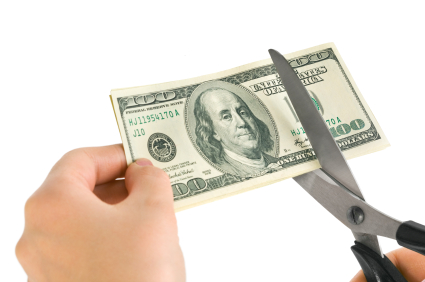
Hedge fund managers take their cut
There is a new book about the hedge fund “industry” by former insider Simon Lack. Its title says it all – The Hedge Fund Mirage – The Lesson of Big Money and Why It’s Too Good To Be True.
Not everybody has time to read books like this, but if you are ever approached by a hedge fund peddler – I get calls every week about an amazing alternative investment opportunity – at least look at the table below before you part with your money.
Between 1998 and 2010, hedge fund fees totaled $440 billion versus $9 billion total profits for investors.

 The Investment Scientist