Oxford Reunion Series: Reductive Strategy
Posted on: June 23, 2026
During the Oxford Reunion Week, I had many interesting conversations with classmates who were attending the strategy class. I took the same class five years ago, and today I would like to share my biggest takeaway from it – reductive strategy.
What is Reductive Strategy?
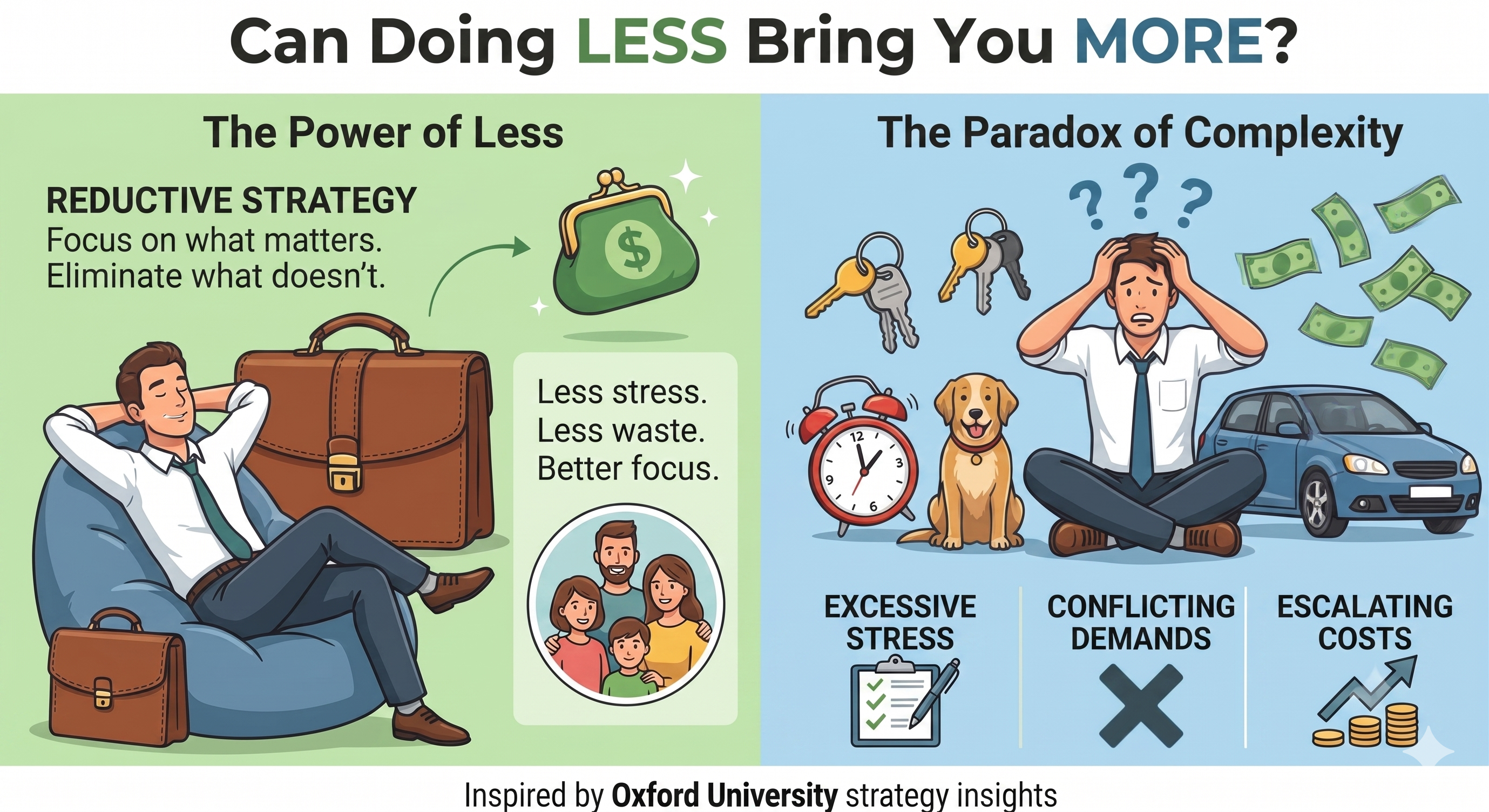
When it comes to strategy, most businesses ask, “What more can we do?” Professor Whittington suggested that we ask a different question instead: ”What else can we stop doing?” This question forms the foundation of reductive strategy.
Take my own line of business for example. Most financial advisory firms try to be all things to all people. Some firms even offer to walk clients’ dogs and to be their golf partners. They believe this makes them more competitive. Drawing from the insight of reductive strategy, I don’t do any of those that is 1) not my core competency, 2) not what my clients come to me for. This strategy has helped me build a simple but elegant practice.
Great Savings from Reductive Strategy
I have applied this strategy to my personal life as well. My children live in Germany with their mom, and my mom lives in a senior care home in China. As a result I spend a substantial amount of time overseas to be with them.
Given this lifestyle, did it make sense to own a house in Maryland when I stay there less than a third of the time? In fact, did it even make sense to keep my Maryland residency? When I applied the reductive strategy to these life choices, the answer to both questions was clearly no.
I sold my house and now I no longer pay a mortgage, property taxes, and Maryland state taxes. The combined savings are over $100k per year.
I hope these examples show you the power of reductive strategy in action. Try applying this strategy to your own life and work and let me know what changes it brings for you.
Get informed about wealth building, sign up for The Investment Scientist newsletter

 The Investment Scientist
Leave a comment