
On Dec 17th, 2017, that’s one year and some days ago, BTC (bitcoins) punched through
the $20,000 level, peaking at $20,042.91. Only twenty days earlier BTC reached $10,000 and it was during this 20-day period that I got the most intense client pressures to get their money into BTC and other cryptocurrencies. I am glad I kept them away from it, since as of today, BTC is at $3700. That’s a loss of 81.5% in a year.
BTC is not a stock since it’s not even a real business. Here’s how some stocks that were red-hot a mere few months ago have been faring …
Apple, the perennial darling of the investment world, just lost nearly 40% from its peak after today’s close. That’s a whopping $460 billion loss. The loss itself is larger than the market capitalization of all but four publicly traded companies.
Share this:

- In: Life
- Leave a Comment

1, I got accepted into Oxford University Business School’s Executive MBA program. I will go to Oxford to attend classes starting in January. The program requires me to go to Oxford one week out of every five for a year and a half with a total of sixteen modules.
2, I’ve nearly finished my second book “Entrepreneur Wealth Management Made Easy.” I expect to publish it in the first half of the new year.
Share this:

 As of the market close on Monday, December 17th, both the Dow and the S&P 500 have a 14% discount, the Nasdaq has a 18% discount and the small cap Russell 2000 index has a 22% discount.
On the Asian front, the Chinese market has a 27% discount, the Hong Kong market has a 22% discount, and the Japanese market has a 12% discount.
On the European front, the German market has a 21% discount, the UK market has a 14% discount, and the French market has a 15% discount.
According to my wardrobe theory of investment, this is a good time to buy stocks. If you were excited about buying stocks a few months back (when these markets were raising prices to new highs), you should be even more excited now!
(Feel free to share if you find it insightful.)
Schedule a Discovery review with me, or get my white paper for free: The Informed Investor: 5 Key Concepts for Financial Success.
Get informed about wealth building, sign up for The Investment Scientist newsletter
Share this:

 Investors are extraordinarily good at hurting themselves. They all plan to buy low and sell high, and yet what they all end up doing is buying high and selling low.
They do that by 1) piling onto the market when it is riding high and bailing when it is dropping low; 2) chasing the immediate past “winner” whether that is gold, emerging market stocks or the S&P 500 only to see the winning streak fizzle. Basically, they are systematically overpaying for assets.
If that sounds like you, well you are not alone. But here is the good news. I am going to give you a simple trick that can help correct your destructive tendency and thereby make you a much better investor.
So are you ready? Drum Roll, please …..
Treat your investment portfolio the same way you would treat your wardrobe.
What are you talking about? Are these two even comparable?
For simplicity’s sake, let say you acquire your entire wardrobe from Neiman Marcus. If Neiman Marcus has an across-the-board 50%-off sale, would you throw up your hands in despair and say,“Darn it, my entire wardrobe just lost half of its value. I better sell it all at the flea market or I will lose everything?”
Share this:

 The recent market volatility reminds me of an ancient Greek historian, Thucydides. He wrote “The History of Peloponnesian War,” about the war between the then reigning power Sparta and rising power Athen. He famously wrote: “What made war inevitable was the growth of Athenian power and the fear which this caused in Sparta.”
Fast forward to two thousand five hundred years later. A Harvard University political scientist, Professor Graham Allison coins the term “The Thucydides Trap” to describe the power dynamic between the reigning power and the rising power. Through an extensive study of historical precedents, he found there are sixteen cases where a major nation’s rise has disrupted a dominant one. Twelve of these ended in wars. For example, the rapid industrialization of Germany rattled Great Britain’s established position at the top of the pecking order, leading to the first World War.
In his book “Destined For War: Can America and China Escape the Thucydides Trap?” Allison argues that this historical metaphor is the best lens through which to observe the US-China relationship.
Share this:

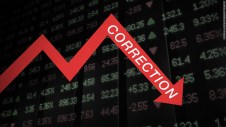 As of yesterday’s closing bell, the Nasdaq Composite is already in correction territory, down more than 12% from its high. However, the other two indices have yet to reach the correction stage, which is marked by a drop of at least 10%: the Dow is down 8.4% while the S&P 500 9.4%.
I am going to look at the recent market drop from two perspectives: statistical and economical.
Looking through the lens of statistics, a correction is long overdue. Why? Well, the historical odds of a correction are once every two years, those of a bear market once every five years. Yet the last time we had a correction was in 2011, seven years ago. Is it well-overdue?
Looking through the lens of economics, there are two exogenous economic forces that are influencing the market. One is the Trump tax cut, the other is the Trump trade war. These two forces are driving the market in opposite directions.
Share this:


Recently, some of my clients asked me a very good question: “Why is my portfolio not doing as well as the S&P 500 index? Shouldn’t we invest more in US stocks?”
The answer is very simple. US equity is only one component of their portfolio, and it happened to do the best this year. The best component of the portfolio will always do better than the whole portfolio. That does not mean we should not diversify.
In fact, I hear similar questions all the time. Seven years ago, it was “Why didn’t we invest more in emerging markets? There’s no way the US market will do better than emerging markets.” Five years ago, it was “Why shouldn’t we put everything in gold? All of my friends are investing in gold.” In each case, I had to twist their arms to get them to stay invested in US stocks, and now they are thanking me.
Share this:

Who Should Use HDHP with HSA
Posted on: September 17, 2018
 In my last newsletter I wrote about how a Health Saving Account (HSA) is the best retirement saving vehicle with triple tax benefits. However, not everybody can have a HSA – you must have a High Deductible Health Plan (HDHP.) Those of you who have traditional PPO/HMO health insurance are not eligible.
This begs the question, who should use the HDHP with a HSA? Here are the simple answers followed by a discussion.
- High income folks especially those in top three tax brackets of 32%, 35% and 37% should use a HDHP.
- Healthy folks should use a HDHP.
- Low income folks who are frequently sick should stay with PPO/HMO.
Share this:

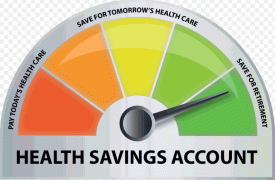 Just this week I get an email from a client of mine asking me if she should contribute to her HSA (health saving account) and if so, how much. So I thought this would be a good time to talk about HSAs.
What is a HSA?
A HSA is a tax-advantaged savings account for health care purposes for folks who enroll in a qualified high-deductible health plan (HDHP.)
HSAs were brought about by President George W. Bush in the same legislation that added prescription drug benefits to Medicare. It was established without much fanfare because at the time all the sound and fury was about the prescription drug benefit. Little did we know that one and a half decades later, it would be becoming more and more popular in the corporate health insurance marketplace.
How does it work?
Share this:

 Many successful families use irrevocable trusts for tax mitigation, wealth transfer and asset protection. In the last few articles, I discussed how an investor with a concentrated highly appreciated position can use a irrevocable charitable remainder trust to diversify concentrated risk, save taxes and benefit a charitable cause.
The caveat with irrevocable trusts is that granting families have to give up a measure of control. The trouble is that many families give up too much control than they need to. The result: they potentially put their goals at risk.
A physician client of mine created a irrevocable life insurance trust (ILIT) years ago to benefit his children. He named his sister, who loved his kids, as sole trustee. Unfortunately over the years, they became estranged and now she does not even return his calls. His trust is effectively in limbo.
What could he have done to avoid this situation?
Share this:

 After my last article, “How to Deal with ConcentratedHighly Appreciated Position,”a reader asked me exactly how much he can save in taxes.
I’ll use him as an example. He owns an investment property that he bought many years ago for $200k that is now worth $800k.
If he sells his investment property outright, he will need to pay a capital gain tax of the amount (800-200)*20% = $120k.
He can set up a CRT (charitable remainder trust), put the property in it , so when he sells it, the capital gain tax is exempt. That’s a savings of $120k right there.
But does he need to give all of that to charities? The answer is no. In fact he can take out money from the trust for his personal use.
Depending on how he takes out money, a CRT can be either a CRAT (charitable remainder annuity trust) or a CRUT (charitable remainder unit trust.)
Share this:

 After my last newsletter article “Top Ten Reasons to Avoid Exchange Funds” went out, I got an email asking how to deal with a concentrated highly appreciated stock position. To this, I replied, “It helps to have some charitable inclination.”
If you have no charitable inclination, no amount of gimmicks can get you off the hook of paying the huge capital gain taxes. At best, you can pay a hefty fee to have someone kick the can down the road by using exchange funds.
However if you are charitably inclined, then a charitable remainder trust (CRT) is a great tool to save on taxes, reduce undiversified risk, create income and benefit charities.
What is a CRT?
A CRT is a trust that lets you convert convert a highly appreciated asset like stock or real estate into lifetime income. It reduces your income taxes now and estate taxes when you die. You pay no capital gains tax when the asset is sold. And it lets you help one or more charities that you care about.
Share this:

 A few days ago, I was approached by an employee of Nvidia regarding his $5mm worth of NVDA stock. A Morgan Stanley broker had pitched him the idea of using exchange funds to diversify his holdings and he wanted my second opinion.
If you are an employee of any of those high flying tech companies like Amazon, Facebook, Google, Apple, Microsoft, Netflix, and etc., you are likely to have been pitched such an idea. Talk to me before you execute anything.
So what exactly are exchange funds? Exchange funds are unregistered private-placement limited partnerships or LLCs designed specially for investors with concentrated positions in highly appreciated stocks to help them diversify without triggering taxes.
How do they work? Investors transfer shares of their concentrated stocks to the fund in exchange for an equal value of units of the fund. These transfers are not taxable since they are considered partnership capital contributions under the tax law. There are a few caveats to the law though: investors have to stay in the fund for a minimum of seven years and the fund must invest 20% of its capital in illiquid assets.
Share this:

In my last newsletter I discussed the profitability premium. It, along with the small cap premium and value premium, form the three established directions whereby investors can improve their expected returns on their stock investments.
To be more specific, to improve expected returns, an investor should tilt their portfolio towards profitable companies, small cap stocks and value stocks.
However, one must keep in mind that return premiums are not certainties. There will be periods, sometimes rather extended periods, during which:
- Small cap stocks underperform large cap stocks
- Value stock underperform growth stocks and
- Profitable stocks underperform unprofitable stocks
Share this:

Ever since Fama and French published their seminal paper “The Cross-Section of Expected Stock Returns” in 1992, the world (at least the academic world) has come to understand that over the long run, small cap stocks outperform large cap stocks and value stocks outperform growth stocks.
This quest to understand stock returns has not stopped. In 2013, Robert Novy-Marx published “The Other Side of Value: The Gross Profitability Premium” in the Journal of Financial Economics. In the course of this research, he discovered that profitability, measured by gross profits-to-assets, has roughly the same power as book-to-market in predicting the cross-section of average returns. Profitable firms generate significantly higher returns than unprofitable firms, despite having higher valuation ratios.
Almost concurrently, other researchers confirmed Novy-Marx’ discovery, notably Fama and French’s new paper “A Five Factor Asset Pricing Model” and Hou, Xue and Zhang’s “Digesting Anomalies: An Investment Approach.” Both papers were published in 2015.
Unlike the small cap premium and value premium, the profitability premium does not have a satisfactory risk-based explanation.
Share this:

Early on the morning of May 13, President Trump tweeted:
“President Xi of China, and I, are working together to give massive Chinese phone company, ZTE, a way to get back into business, fast. Too many jobs in China lost. Commerce Department has been instructed to get it done!”
What?!?!?! Trump wants to save Chinese jobs? To say that I am caught by surprise is an understatement.
Let me give you a little background just in case you don’t pay attention to the news (God Bless You!)
When ZTE was caught selling telecom equipment to Iran and North Korea in 2016, they entered into a plea agreement with the US commerce department (Obama administration) that included the following stipulations:
-
They will pay a $1.19 billion fine, the largest fine ever paid by a company.
-
They will fire the four executives involved.
-
They will discipline the 35 employees involved.
Fast forward to May 2018, just before the US trade delegation headed over to Beijing for negotiations, the US commerce department announced a 7-year ban on component exports to ZTE because they did not carry out the third stipulation of the plea agreement. It turns out the 35 employees were not disciplined, they were given their 2016 year-end bonus!


