While reading USA Today at Panera Bread, I came across an article with a headline that blared: “Managed commodities can counter volatility.” You should have seen the chagrin on my face; you would have thought I was a facial contortionist.
How could such an uninformed article ever get published by a major newspaper? Just imagine the large number of people who will be misled by this article to put money into a financial product they don’t understand.
The claim of this article is based on a comparison of a managed futures index and the S&P 500 index. The managed futures index was compiled by a private firm called Barclay Hedge, basically a marketing arm of the managed futures industry. Read the rest of this entry »
Share this:


Leap of faith
Recently, I went to the monthly meeting of the Chicago Booth Entrepreneur Advisory Group. The group is made up primarily of University of Chicago alumni, and it provides a forum for entrepreneurs to share their issues.
I was blown away by one entrepreneur’s unbridled optimism. He invented a technology that makes changing TV channels on a PC feel as fast as on a real TV. He plans to challenge the cable companies by convincing all of us to watch TV on our PCs.
Yes, cable companies charge us an arm and a leg for their channels, many of which we don’t watch. And nobody loves their cable company. But they have been in business for years. How could a solo entrepreneur working in his bedroom take them on?
Share this:

10. Small Cap Value: Risk and Returns
9. When Do You Need Annuities and Life Insurance?
8. Recession and stock market performance
7. Physicians are Not in Real Estate Business
6. Variable Annuity Fees You Don’t Know You are Paying
5. An Investment Rule for Young People
4. Why Asset Class Diversification is Superior
2. Bill Gates: 11 Things You Don’t Learn in School
1. Profit from Harry Dent’s predictions? Think again
Also see Top 10 last month.
Get informed about wealth building, sign up for The Investment Scientist newsletter
Share this:

[Guest Post by Christopher Guest] On December 17, 2010, President Obama signed the Tax Relief, Unemployment Insurance Reauthorization, and Job Creation Act of 2010, or TRUIRJCA, but I will call it the “tax compromise.” The tax compromise impacted federal estate taxes in a number of ways. One of the more surprising changes was including “portability” of a married couple’s federal estate tax exemption between the married couple. I say “surprising” because all the other changes to estate taxes were some version of current estate tax procedures while “portability” was brand new.
Share this:

Multi-generational families
A business owner came to me for help in untangling a “dynasty trust” he has regretted setting up.
I sat down with him for a discovery meeting.
Now I am no expert in trust law and estate tax matters.
Still, after asking a few pointed questions, I found the trust arrangement problematic.
Here is a record of the question and answer session I held with him.
Share this:


Is Refinancing Right for You?
A recent doctor client of mine told me that he just did a refi through one of his patients who happened to be a mortgage broker.
I asked him what the rate was and he answered: 5% for an 8-year mortgage. This immediately raised a red flag: currently a 15-year mortgage is 3.02%, and a 5-year ARM is even lower at 2.67%. If anything, an 8-year mortgage should have a rate less than 3%.
So every year, he will pay 2% extra in mortgage interest. With a loan of $500k, that’s $10k extra a year. How would you feel if someone stole $10k from you every year? Read the rest of this entry »
Share this:


Annuities and Life Insurance
I recently met with a physician couple who became clients of mine.
Their investment portfolio is chock-full of annuities and life insurance; even their qualified retirement plans are not exempt.
They told me that they went to financial seminars and were convinced that these products were good wealth accumulation vehicles. In fact, they are anything but.
These insurance products have nothing with do with wealth accumulation (except for insurance agents).
Share this:

Stocks On Sales
Posted on: June 6, 2012
This is a client communication letter I wrote on June 1st. One week after i wrote this, the market closed out its best week in 2012.
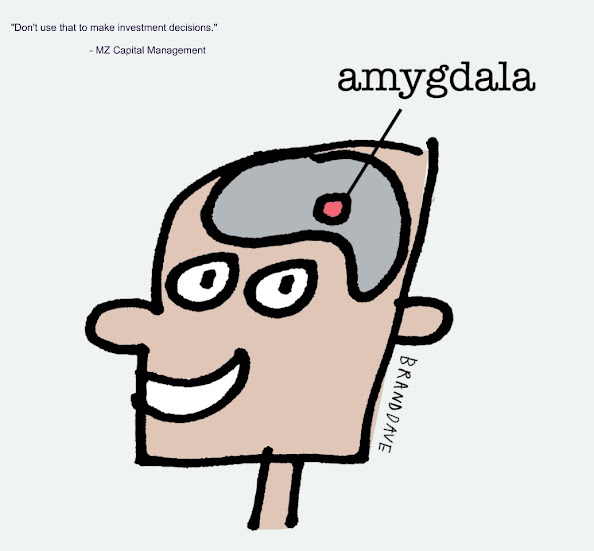
Don’t Use Amygdala to Make Investment Decisions
As I am writing this, the markets are falling like a rock. The Dow has entered negative territory for the first time this year; Nasdaq, which was up 20% a mere two months ago, is up only 5% for the year. The S&P 500 has lost close to 10% of its value since its April 1 peak.
I wrote the above paragraph using typical financial press lingo. This type of language has the tendency to cause amygdala hijack.
The amygdala is a part of our brain that processes threats. When we perceive a threat, the amygdala takes over the whole brain. fMRI scans show that blood supplies are literally commandeered from other parts of the brain for the amygdale. The amygdala is not sophisticated; it only knows three responses: fight, flight, or freeze.
Share this:

This is an article I wrote in middle of May that was published on Morningstar.
Half way into May, major market indexes have all fallen more than 5% from their peaks reached in late March. The Nasdaq has fallen close to 10%. It looks like the ancient stock market folklore “Sell in May and go away” is quietly unfolding right before our eyes.
To get a better understanding of this phenomenon, I did two things recently: 1) I studied the historical returns between May 1 and Sept. 30 and 2) I pondered a plausible explanation of stock market seasonality and its implication on investment. Today, I will report to you the results of my intellectual exercises.<
Historical returns
Using data retrieved from Yahoo.com, I calculated the average S&P 500 index return between May 1 and Sept. 30 to be -0.3% over the past 20 years. As a comparison, the average index return between Oct 1 and April 30 is 7.2%. Clearly the five months starting in May are unproductive for stock investment, historically.
Share this:

[Guest Post by Christopher Guest] Though most people will not see the significance of April 4, 2012, it was a big date for estate planners in Virginia. On that date, Virginia Governor Bob McDonnell signed SB 11 expanding the number of types of trusts that are permissible in Virginia. Starting on July 1, 2012. Virginia will become the thirteenth state to permit the self-settling of domestic asset protection trusts (or DAPT)i. More significantly, the VA code sections will allow a settlor to establish an irrevocable trust of which the settlor is a beneficiary and will also provide spendthrift protection against claims from the settlor’s creditors.
Share this:
10. A balanced portfolio to avoid
9. Is P/E ratio a useful stock valuation measure
8. Bonus depreciation: Congress wants businesses to invest in 2011
7. Be careful when buying a condo
6. Variable annuity fees you don’t know you are paying
5. Bill Gates: 11 Things You Don’t Learn in School
4. Why asset class diversification is superior?
3. Top ten reasons you can’t get rick buying FB
1. Profit from Harry Dent’s prediction? think again!
Also see Top 10 last month.
Get informed about wealth building, sign up for The Investment Scientist newsletter
Share this:

Doctors and Real Estate Investments
What would making $1.5mm a year look like? How about living pay check to pay check, and one bad real estate deal away from bankruptcy.
This is exactly what happened to one physician before he became my client. He is a partner of a very large practice and brings home more than $1.5mm a year, and yet he has only $100,000 in his bank account. If he stops working today, the money will run out in three months.
How did he get into such a quandary? In short, real estate.
Share this:

Financial Plan for FB Employees
My friend Sally has a friend who is a software engineer at Facebook. The recent Facebook IPO made him a millionaire, many times over. According to Sally, he is overwhelmed by this sudden wealth and wondering how to deal with this mountain of money.
I have a suggestion: put the money in nine buckets.
Let me explain. All you newly rich Facebook employees need is a framework to deal with your money. It is a 3 by 3 box. Horizontally, it is divided into Need, Want, and Aspiration. Vertically, it is divided into Short, Med, and Long.
Need, Want, and Aspiration
Share this:


1. Facebook is a great service to help you keep in touch with friends and family. But a great service does not equal great investment.
2. When was the last time you clicked on a Facebook ad? I can’t recall when I ever did. The click-through rate for Facebook ads is 10% that for Google ads, for good reason. Google ads are delivered at the moment you have actionable intent, while Facebook ads are delivered when you don’t want any distraction.
3. As more and more people use mobile devices to access Facebook, this will present a big challenge since it is nearly impossible to display distracting ads on tiny mobile screens.
Share this:

Facebook Scam Hits Close to Home
Posted on: May 14, 2012

Facebook Scam
Two months ago, I got a call from client of mine, who asked my opinion about an opportunity to invest in pre-IPO Facebook shares. He explained that he and his business partner were offered the opportunity to invest in a private fund that will hold Facebook shares.
I know nothing about these funds, but I told my client to stay away. As a general principle, I always steer my clients away from private funds unless they run the funds themselves. The reason is very simple: these are unregulated vehicles where there is no government oversight and there is no transparency whatever. You don’t know what monkey business they do with your money. Most business people intuitively grasp that if the private deal is about starting a restaurant; but once the deal is about buying Facebook shares, many of them throw caution to the wind.
Share this:


They don’t necessarily overlap
I met Joseph in a startup networking event. He was trying to attract investors for his latest venture. He has an impressive resume: he founded a tech company that was later sold for tens of millions of dollars in the 1980s.
I was immediately struck by the “never say old” motto of this 75-year-old entrepreneur. But one thing did come across as odd: he was trying to raise a mere $500k for his new venture. Why didn’t he just fund the venture out of his own pocket?
A few months later, I invited him to a charity fundraising dinner where the ticket is $100 per person. He finally admitted to me: “Michael, I don’t have an extra $100 to spare.”

