Archive for the ‘Economics & Markets’ Category
When China runs out of cheap labor
Posted on: April 22, 2010
China has 1.3 billion people. In the last two decades, it is the source of seemingly limitless supplies of cheap labor to the world’s manufacturing industries. Believe it or not, this pool is about to run dry. When that happens, there will be huge implications for the world.
Even before my trip to China, I had read with incredulity that China’s exporting provinces are experiencing severe labor shortages requiring firms to raise wages 20%–30% just to keep the workers they have. My first stop in China was Shenzhen, a city that is home to Walmart’s worldwide procurement center. I stayed in the Evergreen Resort, a facility owned and operated by my friend Mr. Lin.
Share this:

Is China a big bubble?
Posted on: April 1, 2010
What a difference eighteen years have made.
Eighteen years ago, I was awarded a scholarship to study mathematics in the U.S. The China I left behind was very different from the China of today:
- Then there was no private ownership of automobiles; now China boasts the world’s largest car market.
- Then there was no private ownership of houses; now there is little public housing left.
- Then China had a grand total of 28 kilometers (17 miles) of expressway; now China’s expressway network is second only to the U.S.
- Then there was no high-speed train service to speak of; now China has the fastest high-speed train service in the world covering the equivalent distance of New York to Chicago in three hours.
- Then China’s economy was the 13th largest; now it is the second largest.
Share this:
Inflation is the silent killer of wealth. It does not have the “bark” of a full-blown financial crisis, but it certainly has the “bite.” Just imagine if the inflation rate is 4% over the next 10 years; within a decade you would lose nearly 40% of your wealth if you didn’t do anything about it.
Inflation over the next decade is highly probably because of two simple macro realities:
- America – from the federal government to the states down to individual households – is heavily in debt. The easiest way to get out of debt is to print money. There is a tremendous political incentive to do so.
- China, which has been the low-price setter for the past two decades, has seen labor costs galloping at a 20% to 30% annual clip lately (thanks to the one-child policy). Before long, that will translate into higher prices at your local Walmart.
Share this:
How not to ruin a 60/40 portfolio
Posted on: January 6, 2010
This past Christmas, I had the distinct pleasure of calling several of my clients in retirement and telling them their portfolios are back to their pre-crisis level and their financial freedom is safe and sound.
Their portfolios are variations of the so-called 60/40 portfolio – about 60% in equity-like investments and 40% in bond-like ones.
Many other 60/40 portfolios have been decimated by this crisis. Even with recent gains, they are still far from recovering all their losses. How did I manage to pull even for my clients? There are a few key lessons I’d like to share.
Share this:

Harry Dent selling “The Great Depression Ahead”
I am exasperated. A client of mine just sent me Harry Dent’s latest book, The Great Depression Ahead, with a note. My client was absolutely convinced that the Dow will go down to 3,800, and he wanted me to do something to profit from this inevitability.
I don’t blame him. Dent is a brilliant man; he makes compelling arguments based on the demographic of aging baby boomers like my client, with just enough data and charts to make the book look authoritative. Couple that with a daily dose of bleak headlines:
Share this:


Professor James Poterba
MIT economics Prof. James Poterba has conducted very rigorous research on the subject of demographic trends and asset returns. His research examined the relationship between demographic structure and returns on Treasury bills, long-term government bonds, and stocks, using data from the United States, Canada, and the United Kingdom.
What he found?
From his research, Poterba concluded: “The empirical results suggest very little relationship between population age structure and asset returns.”
Share this:


French

Fama
In their seminal paper “The Cross-section of Expected Stock Returns,” Fama and French demonstrated
that value stocks had outperformed growth stocks in the U.S. markets since 1963 (when CRSP data became available). They called this phenomenon the Value Premium.
Share this:

The Significance of Dow 10,000
Posted on: October 15, 2009
 “It is a tale told by an idiot, full of sound and fury, signifying nothing.” – Shakespeare
Yesterday, the Dow passed 10,000 again. Predictably, the press kicked up a big storm about it.
Even a relatively unknown like me got a call from a major newspaper asking me to comment whether this was a sign that the market would keep going up. I really struggled to answer. I knew that if I could spin a good story, the reporter would come back to me for more and more comments. Pretty soon, I would look like a stock market guru to my clients and prospects. This would surely be a win-win for me and the newspaper – if only I could bring myself to pretend.
Share this:

“The recession is very likely over.” – Fed Chairman Bernanke on 9/15/09.
What does the fed chairman’s statement mean for stocks, if indeed the worst recession since 1929 is over? We don’t know for sure. We can, however, let history be our guide.
In this spirit, I studied the one-year and three-year returns of the S&P 500 Index and the Fama/French Small Cap Value Index coming out of a recession for the nine recessions since 1950.
Share this:
Out of curiosity, I took the S&P 500 annual return data since 1926, calculated the index’s moving 10-year returns and produced the chart below. Two things are worth noting:
1. The 10 years ending 2008 are the worst ever for the index, with a total return of -13%.
2. The S&P 500’s 10-year return dynamic seems to follow a periodic pattern. The second worst 10-year period ended in 1938 (-9%); and the third worst 10-year period ended in 1974 (13%), almost right in the middle of 1938 and 2008. Serendipity?
The market is in a trough. A chart can not predict the future, but if it can, things can only get better from here.

S&P 500 10-year return dynamic
Get my white paper: The Informed Investor: 5 Key Concepts for Financial Success.
Get informed about wealth building, sign up for The Investment Scientist newsletter
Share this:

On the after-effect of government bailout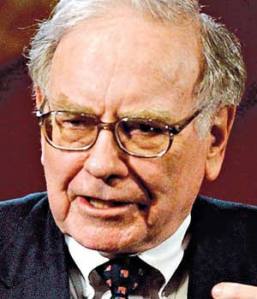
This debilitating spiral has spurred our government to take massive action. In poker terms, the Treasury and the Fed have gone “all in.” Economic medicine that was previously meted out by the cupful has recently been dispensed by the barrel. These once-unthinkable dosages will almost certainly bring on unwelcome aftereffects. Their precise nature is anyone’s guess, though one likely consequence is an onslaught of inflation. Moreover, major industries have become dependent on Federal assistance, and they will be followed by cities and states bearing mind-boggling requests. Weaning these entities from the public teat will be a political challenge. They won’t leave willingly.
On government bailout
Whatever the downsides may be, strong and immediate action by government was essential last year if the financial system was to avoid a total breakdown. Had that occurred, the consequences for every area of our economy would have been cataclysmic. Like it or not, the inhabitants of Wall Street, Main Street and the various Side Streets of America were all in the same boat.
On his own mistake
… But there’s another less pleasant reality: During 2008 I did some dumb things in investments. I made at least one major mistake of commission and several lesser ones that also hurt. I will tell you more about these later. Furthermore, I made some errors of omission, sucking my thumb when new facts came in that should have caused me to re-examine my thinking and promptly take action.
Share this:

I wrote this article in early December 2008. Amazingly, it is one of the least read in my blog. Had someone read it and followed it, he would have earned 10% return so far in 2009.
– Michael Zhuang 3/10/2009
At the moment of writing this, SPY, the exchange traded fund (ETF) for the S&P 500 index, is trading at $85.95 and the near at-the-money call option (with strike 86 and only eight days until expiration) is trading at $3.45! (A call option is the right to buy the underlying stock at the strike price. At-the-money means the option strike price is equal to the price of the underlying stock.)
The at-the-money call premium is a full 4% of the underlying index price! Historically, that number has been in the 1% to 2% range.
What does 4% premium imply?
Share this:

After the election of Barak Obama as our next president last night, I did an exercise to find out the historical stock market performance under a Democratic vs. Republican administration since 1900.
My examination showed that the view that a Democratic president is bad for the market is unfounded. In three important measurements: S&P 500 return, dividend growth and earning growth, stocks have done better under a Democrat administration.
However, the notion that a Democrat is bad for inflation does ring truth, as evident by the 4.8% inflation rate under a Democratic White House compared to the 2% under a Republican one.
| S&P 500 return | Dividend growth | Earning growth | Inflation | |
| Democrat | 8.1% | 5.6% | 10.6% | 4.8% |
| Republican | 6% | 5% | 5.7% | 2% |
Data source: Yale University Professor Robert Shiller’s database
My next exercise is to find out how the market performed during periods of Democratic control of both the White House and Congress. Sign up for my newsletter to get this information.
Share this:
“This sucker could go down!”
That was what President Bush said during the recent $700 billion bailout plan meeting with congressional leaders at the White House. The market has gone down another 20% and talk of another Great Depression has filled the airwaves ever since.
If you are a listener of Jim Cramer, you would have heard his advice: Sell, sell, sell! He constantly reminds his listeners how the Dow went down 83% during the Great Depression; and never fully recovered until 1954.
Cramer forgot to account for dividends. If dividends from the Dow stocks were reinvested, then investors would have been able to recoup all losses by 1945. That’s a full nine years sooner! Think about this: what if investors held only high-dividend stocks? Would they have recovered their investments even sooner?
To find out, I examined the following four portfolios’ performance from 1929 onwards:
- Portfolio A: stocks with zero dividends.
- Portfolio B: stocks with bottom 30% dividend yields.
- Portfolio C: stocks with middle 40% dividend yields.
- Portfolio D: stocks with top 30% dividend yields.
All four portfolios peaked in August, 1929. With the exception of portfolio B, all portfolios bottomed in May, 1933. Portfolio B bottomed in June, 1933. For each of the four portfolios, the total peak-to-trough decline (drawdown) and the number months it took to recover are presented here:
| Buy at the top and hold during Great Depression | ||||
| A | B | C | D | |
| Drawdown | 89% | 86% | 85.4% | 84% |
| Months to recover | 132 | 154 | 144 | 44 |
Data source: Kenneth French Data Library
It is probably not surprising that the highest dividend-yielding portfolio D fell a little less than other portfolios. It’s striking that portfolio D recouped all losses in just three-and-a-half years – eight to nine years before other portfolios.
Why did high dividend-yield stocks performed so well?
During the Great Depression, stock prices on average fell more than 80%. Dividends fell only about 11%. (See Chart below) As Yale University professor Robert Shiller has found, historically dividend volatility was about 15% of price volatility (meaning dividend declines were a fraction of price declines in recessions.) Stable dividend payments quickly made up for losses in price.
If the price gyration makes you dizzy, focus on dividends instead. They don’t gyrate and ultimately, they will sustain your retirement.
Schedule a 2nd opinion financial review, buy my wealth mgmt books on Amazon.
Get informed about wealth building, sign up for The Investment Scientist newsletter
Share this:
Great Depression II?
Posted on: October 9, 2008
Since President Bush declared that if the Congress does not give Secretary Paulson the $700 billion blank check, “the sucker could go down!” the talks of another Great Depression have filled the air waves.
So how much today resembles the Great Depression that lasted from 1929 to 1933?
It doesn’t take a lot to bring together data from various government sources to present a comparison in the table below.
Table: Comparison of the Great Depression and today
| Factor | Great Depression | Today |
| GDP growth | -27% | +1% |
| Unemployment rate | 25% | 6% |
| US exports | -66% | +15% |
| Inflation | -27% | +4% |
| Stock market | -83% | -43% |
Data source:
Granted, the situation today could get a lot worse before getting better, it simply does not resemble the Great Depression. However, the stock market already have priced in half the chance of that.
Did President Bush and Secretary Paulson scare us so much, we not only handed over the $700 billion blank check, but we pee our pants as well?
Get informed about wealth building, sign up for The Investment Scientist newsletter
Share this:
Warren Buffet said: “Price is what you pay and value is what you get.”
Wall Street uses the price-to-earning ratio, or the P/E ratio in short, to determine whether one gets what one pays for when buying a stock. Is this ratio just a myth? Or is it a useful valuation measure?
To answer this question, I examined the whole stock market data for the past 50 years from 1958 to 2007. For each year, I separated stocks into three portfolios: the top 30% P/E portfolio, the middle 40% P/E portfolio and the bottom 30% P/E portfolio. (Stocks with negative earnings are all in the top 30% P/E portfolio.)
If I had invested $1 in each of the three portfolios at the beginning of 1958, by the end of 2007, the top 30% P/E portfolio would have grown to $91; the middle 40% P/E portfolio would have grown to $322 and the bottom 30% P/E portfolio would have grown to $1698! (The chart below shows the growth of $1 in the three different portfolios in logarithmic scale.)

In fact, in the past 5 decades, there was not a single decade in which the bottom 30% P/E portfolio did not outperformed the top 30% P/E portfolio. The decade spanning 1968 to 1977 was especially eventful: two global recessions, the Arab-Israeli war and the Arab oil embargo. The returns of the three portfolios in that decade are as follows:
Top 30% P/E portfolio: 31%
Middle 40% P/E portfolio: 61%
Bottom 30% P/E portfolio: 137%
It is safe to conclude that the P/E ratio is a very useful valuation measure for long-term stock investment. The lower the P/E ratio, the higher is the expected long-term return. That does not mean that low P/E stocks outperform every year though. In the last 50 years, there are 12 years in which the top 30% P/E portfolio outperformed the bottom 30% P/E portfolio. Take 2007 for example, the top 30% P/E portfolio outperformed the bottom 30% portfolio by more than 13%.
Get my white paper: The Informed Investor: 5 Key Concepts for Financial Success.
Get informed about wealth building, sign up for The Investment Scientist newsletter

 The Investment Scientist