
Share this:

 One day two years ago, I got an email from a client of mine. In a very concise manner, he told me he was in Singapore for a business deal and he needed to wire $500k from his investment account to a bank account in Singapore.
To raise the money, I would need to sell some of his highly appreciated investments. I didn’t want him to be surprised by capital gain taxes, so I replied with an explanation of the tax implications.
After that, I was ready to wire the money, so I sent him a short message: “You know our standard procedure, any time a client wants to move more than $10k, he needs to call me to tell me in his own voice.” I totally expected my phone would ring right away.
Instead, I got another email: “I am in Singapore, I don’t have a phone with me, take this email as my authorization to wire the money.”
Share this:

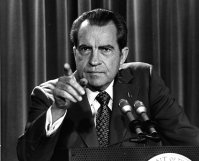 After the Comey firing and the dropping of a few other shoes, there is enough talk about the similarity to Watergate that piques my interest to study the stock market’s reaction during the Watergate period.
The Watergate period started with the arrest of five burglars breaking into the DNC offices located in the Watergate Hotel on 6/17/1972 and ended with Nixon’s resignation on 8/8/1974. I split that time period into three different stages.
-
The early stage: from 6/17/1972 to Nixon winning re-election on 11/11/1972.
-
The middle stage: from 11/11/1972 to 10/20/1973 when Nixon fired Archibald Cox and abolished the office of the special prosecutor. Attorney General Richardson and Deputy Attorney General William D. Ruckelshaus resigned. The day’s events are commonly known as the Saturday Night Massacre.
-
The final stage: from 10/20/1973 to 8/8/1974 when Nixon resigned.
Share this:

Beware of Financial Advisor Awards
Posted on: May 3, 2017
- In: Life
- Leave a Comment

Am I super excited about this recognition?
Hardly!
This is not the first time I’ve gotten this type of email. In the past, I have received similar emails from both strangers and people claiming to represent well-recognized publications like Barron’s and Forbes. They all told me that they wanted to recognize me as the best wealth manager/financial advisor/financial planner in the country, or in my state, or in my city, or ever born. Read the rest of this entry »
Share this:

When the PE10 is over 29 …
Posted on: April 5, 2017
The US market ended the month of March with the PE10 at 29.02. The PE10 is a stock market measurement devised by Nobel Prize winner Robert Shiller to measure the extent of market over-valuation or under-valuation. The long-term mean of the PE10 is 17, so the current level is nearly twice the long-term mean.
There have been only two other instances in history when the PE10 was this high, one in July, 1929 and one in February, 1997. It’s very interesting to study these two instances to frame our expectations of future market returns.

In the 1929 instance, the market peaked two months later while in the 1997 instance, Read the rest of this entry »
Share this:


I’ve done a lot of second opinion financial reviews over the years and these fees are broadly consistent with what I’ve seen in portfolios managed by Wall Street brokerages like Merrill Lynch, Morgan Stanley, Ameriprise etc.
In comparison, my fees are 1% for the first million, 0.7% for amounts up to $5mm and 0.4% for amounts over $5mm. Most independent RIAs (registered investment advisers) are like me – our fees are about a third of those by major brokerages.
Everything else being equal, if you are paying 1.5% more a year in fees, a back-of-the-envelope calculation will tell you that in 20 years you will be 30% poorer because of those higher fees. In 30 years, you will be 45% poorer.
But everything else is not equal. There are two other major distinctions between brokers and RIAs: Read the rest of this entry »
Share this:

Is the Market Over-Valued?
Posted on: February 21, 2017

Read the rest of this entry »
Share this:

An Update on Trump’s Tax Plan
Posted on: February 1, 2017
 t week I attended a tax seminar organized by McLean Estate Planning Council. The keynote speaker was a CPA and lobbyist for the AICPA on Capitol Hill. He is privy to Trump’s tax reform plan and a number of other Republican tax reform plans. These plans have a long way to go to become law, but the contour is taking shape so I thought I would share what I learned with you in a few bullet points. Note that I bolded the parts that may be disadvantageous to taxpayers.
-
The number of tax brackets will be reduced from seven to three, and the top marginal income tax rate will be reduced from 39.6% to 33%.
-
Personal exemptions will be eliminated.
-
Standard deduction for married filing jointly will rise from $12,600 to $30,000.
-
Itemized deductions will be capped at $200,000 per household.
-
Mortgage interest deduction will be eliminated.
-
Tax rate will be reduced from 35% to 25%.
Share this:

Don’t Panic If This Happens
Posted on: January 16, 2017
 Since the election, the US stock market has been breaking new highs, encouraged by the prospect of lower taxes and higher growth. However I believe investors have not paid sufficient attention to the prospect of a trade war.
To a large extent, the election of Donald Trump is a repudiation of globalization by a large segment of the US electorate. Even though the country as a whole has benefited tremendously from globalization, those benefits have by and large bypassed working-class folks.
Before 2000, Apple made all of its computers in the US and its market cap never rose about 10 billion dollars. Since then, Apple has subcontracted all of its production overseas and only kept design and marketing in US soil. The result?
Apple has become the most valuable company in the world with a market cap of over $600 billion even though they only have 66,000 employees in the US.
At the same time, Apple’s contract manufacturer Foxconn directly employs over 1 million workers in China. The supply chain to Foxconn employs another two million people. Read the rest of this entry »
Share this:

- In: Life
- Leave a Comment
- I went to San Francisco to study improvised musical theater and performed at the Bay Front Theater for a 45 minute set of musical story entirely improvised on stage.
- Against all odds, I kept Storyfest Short Slam, a short storytelling contest, alive and strong at the Bethesda Writer’s Center.
- I visited my English teacher whom I had lost touch with for 30 years. I couldn’t have accomplished this much in the US without him. I went to say thank you to him personally. I went to Guangzhou for my high school reunion and took pictures with my female classmates for the first time. (Back then we didn’t hang out with the opposite sex.)

- At Leadership Montgomery homecoming, I acted out Michael Jackson. Read the rest of this entry »
Share this:

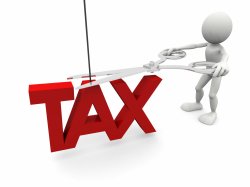
With the election of a Republican president and a Republican Congress, the tax Wheel of Fortune is spinning again. Since it’s December 2016, you will have to make an educated guess and place your bet now before the wheel comes to a stop.
Tax cuts are very likely, as is a cap on deductions. According to President-elect Trump’s tax proposal, the seven tax brackets will be reduced to three, the top marginal rate will be reduced from 39.6% to 33%, and the 3.8% Obamacare surtax on investment will be repealed. However, itemized deductions that include mortgage interest and charitable donations will be capped at $200k for joint filers.
If you make a few smart moves now, you can potentially save big.
- Delay recognition of incomes and accelerate recognition of expenses/deductions.
- Maximize retirement savings
- Take capital losses.
- Front load your charitable contributions
You can use a donor advised fund to front load your charitable contributions. Take my situation,for example. I typically give about $3000 a year to charities. I now have a d Read the rest of this entry »
Share this:

My Best Investment in 2016
Posted on: December 7, 2016

A few months ago, I stumbled upon a report about a homework essay written by a nine year old girl, Jia Jia, in rural China. The title of the essay was “If I live to be a grownup 如果我能长大.” It turns out Jia Jia suffers from thalassemia, a blood disease that requires a blood transfusion every 40 days. Without them, she would die. Jia Jia was abandoned by her own parents because they could not afford the medical treatments, but her grandmother refuses to give up on her.
Jia Jia is very aware of her own mortality, but she still has dreams. In the essay, she wrote how she was heartbroken to see her grandmother weep because she did not have enough money for her granddaughter’s treatment. She also wrote that if she lives to be a grownup, she wants to take care of her grandmother so she never has to worry about her again; she wants to become a doctor, so she can treat those people who can’t afford medical treatments.
I was so touched by the overflow of love despite their tragic situation that I called the reporter to get the grandma’s phone number and home address. Read the rest of this entry »
Share this:


When I was in California last week, I met with a prospective client and did a second-opinion financial review of his situation. He has $5mm in his company’s ESPP (employee stock purchase plan.) I can’t help but feel a bit dizzy, that feeling you get when you’re standing on the edge of a tall building without any protection.
I have a friend who was a senior engineer at MCI Worldcom. He also participated in this company’s ESPP. In only a few years, Worldcom went from being a no-name, little known company to acquiring the second largest telecom at the time – MCI, and its stock price went up tenfold. The value of my friend’s ESPP account went from $300k to over $3mm and he looked extremely smart by not diversifying at all.
The rest of the story you all know. MCI Worldcom filed for chapter 11 in 2002 due largely to corporate fraud committed by their executives. Its stock price plummeted to zero and my friend lost every dime in his ESPP.
So what exactly is an ESPP?
An ESPP enables a company employee to purchase company stock through payroll deduction.These kind of plans are very popular among high-tech companies because they are considered a very effective way to align the interests of the employees and the firm. Read the rest of this entry »
Share this:

This is, unfortunately, an all-too-common story I have heard. A new client of mine told me that his father bought a $500k variable universal life insurance policy for him 26 years ago, hoping that when he died he would leave half a million dollars to his children. (26 years ago, that was a lot of money.)
The premium for the insurance policy is $9000 a year. At some point, his dad asked him to take over the premium payments.. Between the two of them, they have already paid in a total of $234,000, but the cash value of the insurance is only $103,000.
Next year, his dad will turn 80 and here is the in-force illustration the insurance company gave him. Basically, even if he continues paying the premium, his insurance will lapse when his dad turns 83, a mere four years from now. If that happens, they will have paid $270,000 to the insurance company, all for nothing. To avoid that outcome, his dad literally has to die in within the next four years.
When his dad turns 80, the mortality expense of the life insurance escalates to $40k – $50k per year, far more than the annual premium. The shortfall has to be drawn from the cash value. That’s why the cash value will dwindle fast. When there is no cash value left, Read the rest of this entry »
Share this:

 I took the sensationalist title from a CNBC article I read yesterday. The articles talks about, and I quote, ” … hedge funds, as a category, is experiencing the worst quarter of outflows since the bottom of the financial crisis … there were an avalanche of stories about the industry’s nearly systematic underperforming.”
Readers of my newsletter and blog, The Investment Scientist, can thank me later for warning them years ago.
On April 28, 2011, I published “A Balanced Portfolio to Avoid (II): Hedge Funds Don’t Deliver Outstanding Returns.” Let me quote my former self: “Hedge funds are often peddled as an unique asset class that are uncorrelated with the market. In reality, hedge funds are as much an asset class as Las Vegas is.” The unspoken message is: you should expect to lose money.
On August 15, 2012, I published “Why You should Avoid Hedge Funds.” I wrote that article after I read the book by former hedge fund industry insider Simon Lack, “The Hedge Fund Mirage.” I summarized the book in one sentence for my readers: “Between 1998 and 2010, hedge fund fees totaled $440 billion vs. $9 billion profits for investors. Read the rest of this entry »
Share this:


At the end of June this year, UK citizens voted in a referendum for the nation to withdraw from the European Union. The result, which defied the expectations of many, led to market volatility as participants weighed possible consequences.
Journalists responded by using the results to craft dramatic headlines and stories. The Washington Post said the vote had “escalated the risk of global recession, plunged financial markets into free fall, and tested the strength of safeguards since the last downturn seven years ago.” The Financial Times said “Brexit” had the makings of a global crisis. “[This]represents a wider threat to the global economy and the broader international political system,” the paper said. “The consequences will be felt across the world.”
What about those self-proclaimed financial gurus? Motley Fool wrote: “Sell Everything! How Brexit Can Shatter Share Market” and Jim Cramer wrote: “Don’t Buy! Why the Mass Brexit Sell Off is Worth Riding Out.”
It turned out there was no “mass brexit sell off.”
It’s true UK got a new Prime Minister, and the Pound Sterling fell to 35 years low. But within a few weeks of the UK vote, Britain’s top share index, the FTSE 100, hit 11-month highs. By mid-July, the US S&P 500 and Dow Read the rest of this entry »


