 Seven years ago when I started my advisory practice, I used to call myself ‘The Investment Scientist’ to differentiate from those run of the mill financial advisors.
My blog was called ‘The Investment Scientist’, and in marketing materials, I highlighted my academic training and scientific approaches toward investing.
Then, for whatever reason, I stopped doing that. Even the title of my blog has been changed to ‘The Investment Fiduciary.’ (The word ‘fiduciary’ signals my intention to put my clients’ interest first, but few understand its true meaning.)
Over the past year, I’ve rarely heard people call me an investment fiduciary, but sometimes would come across a long lost contact who’d say, “Aren’t you the Investment Scientist?”
There is a lesson here for me. Don’t use obscure words people don’t understand in marketing.
So why am I reverting back to ‘The Investment Scientist’ again?
Firm | Youtube | Facebook | Twitter | LinkedIn | Newsletter
Share this:

- In: Life
- Leave a Comment
 Last Monday I went to Philadelphia to visit a client. After the meeting, I thought I would give myself a break. I would go check out a storytelling contest organized by First Person Arts at the World Cafe.
When I got there, they asked me if I wanted to participate. Well, I did not have a story, but what the heck, I’d come this far already. I would make up one on the fly. It would be a thrill to take part in a contest totally unprepared.
I spent the next hour preparing a story, which is based on a real-life experience that I’ve kept a secret thus far.
I went on stage, and the crowd loved my story! There was laughter like every ten seconds. In the end, I won the contest hands down. Now, I am a top ten storyteller in Philadelphia! I will have to go back to contest for the title of “Best Storyteller in Philly.”
I was so thrilled by my win, the excitement didn’t even subside after a whole week. This was a seriously cheap thrill, since all in all I’d spent only $10.
Let me elaborate on exactly why I am so thrilled.
Firm | Youtube | Facebook | Twitter | LinkedIn | Newsletter
Share this:

How to Pay Off Debts
Posted on: September 12, 2013
 A client I visited shared with me that he is very burdened by his debts. He has a primary mortgage, a secondary mortgage and a personal loan. He asked me whether he should pay off the debts and in what sequence. That’s a fantastic question.
Here are the partial details of his debts (I’ve concealed the amounts).
-
The primary is a 15 year fixed rate mortgage with a rate of 3%.
-
The secondary is a 5 year ARM with a current rate of 2.5%.
-
The personal loan has a rate of 5%.
Here are my recommendations to him.
Firm | Youtube | Facebook | Twitter | LinkedIn | Newsletter
Read the rest of this entry »
Share this:

 1. “The gross revenues for the financial services industry in 2010 were $1.129 trillion. That year, total US financial assets stood at $50.38 trillion, meaning that the financial services industry as a whole is skimming 2.25% a year out of everyone’s wealth.” This is an excerpt from a post on Wealthcare Capital entitled “Investment Expenses – The Other Millionaire You Make.” How about I help you cut those expenses by half?
2. Shocking! Shocking! Your elected representatives want the financial industry to continue ripping you off!
3. Ike Devji wrote a piece “Investment Fraud Red Flag for Physicians.” It is packed full of useful tips. I have one thing to add though, never work with a broker, regardless how clean his or her broker check record. These people are not legally obliged to watch out for your best interest.
4. A very succinct piece in Physicians’ Monday Digest about How Rising Interest Rates Would Affect You.
5. Taxpayers beware, AccountingToday has a piece on tax deductions expiring in 2014.
Firm | Youtube | Facebook | Twitter | LinkedIn | Newsletter
Share this:

The Agony of The Landlord
Posted on: September 5, 2013
 A physician client of mine called me the other day and asked my advice as to whether she should evict the tenant currently residing in her condo. This is advice I hate to give. Let me explain.
The tenant is a single mom with two young children, whose estranged husband just stopped paying child support because he is officially unemployed, but the tenant believes he is getting paid under the table.
My heart goes out to this tenant, I would never want her and her children to become homeless. But my head tells me that if my client lets her stay for free, she would most likely wind up staying for free forever and my client’s rental property would become a toxic asset.
So what should I advise my client?
Firm | Youtube | Facebook | Twitter | LinkedIn | Newsletter
Share this:

 10. P2P Lending: A New Asset Class?
9. A Lesson From a Client: Celebrity Business Gone Bad
8. The High Cost of Fee-Based Financial Advisors
7. How Often Do Market Corrections Happen?
6. Captive Insurance: A Business Owner’s Heaven?
5. How I Helped a Client Save $100k in One Meeting
4. Variable Annuity Fees You Don’t Know You are Paying
2. Be Careful When Buying a Condo as a Rental Property
1. Profit from Harry Dent’s Prediction? Think Again
Also see Top Ten in July.
Firm | Youtube | Facebook | Twitter | LinkedIn | Newsletter
Request White Paper | Request Discovery Meeting
Get informed about wealth building, sign up for The Investment Scientist newsletter
Share this:

 I am not a fan of permanent life insurance. Over the years, I have helped many people extricate themselves from costly life insurance policies. Invariably, they were sweet talked into buying these products without any real need.
But recently, I’ve actually had to help a client shop for a permanent life insurance policy. They have a child with a potentially permanent medical condition. Of course we hope and pray that he will outgrow his medical problem, as many kids do, but as parents, they must prepare for the worst.
This is one of the few legitimate reasons for using permanent insurance. Other legitimate reasons include to pay for estate taxes, or to facilitate business succession.
Here is the decision process I employed to help my client, bearing in mind that insurance products are not under the purview of the SEC and are usually chock full of hidden costs.
Firm | Youtube | Facebook | Twitter | LinkedIn | Newsletter
Share this:

What Actually Matters
Posted on: August 28, 2013
This is the title of a newsletter by my peer and friend Russ Thornton. It is fabulously written. I asked his permission to take out a large excerpt:
A recent Onion headline caught my attention. I think I saw it on Google+.
It read . . . Report: Only .00003% Of Things That Happen Actually Matter
The article references a fake Pew Research Center report, and while clearly this is an extreme (and artificial) claim, I think there’s more truth here than fiction.
Especially when it comes to your money and your financial decisions.
Whether it’s the financial media, friends, family, advisors or your psychic, you don’t have to look far for people and organizations eager to tell you what matters with your money. And why.
Interest rates. The price of oil. Trouble in the middle east. Trouble in Washington, DC. Fed tapering. Gold going down. Silver going up.
And the long list goes on.
However, I’d like to suggest a couple of alternatives . . .
Share this:

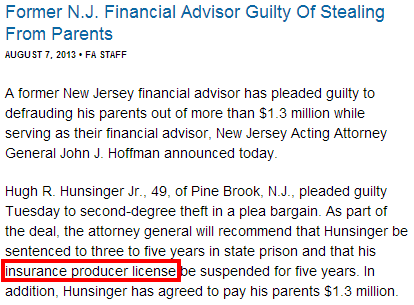
I want all of you to know that not all financial advisors are the same. In fact “financial advisor” is a free term. There is no educational requirement nor legal requisite. Justin Bieber and his grandmother could call themselves financial advisors and begin dispensing advice – and they would not get into trouble for it!
In reality though, there are generally four types of people who like to call themselves “financial advisors”:
Firm | Youtube | Facebook | Twitter | LinkedIn | Newsletter
Share this:
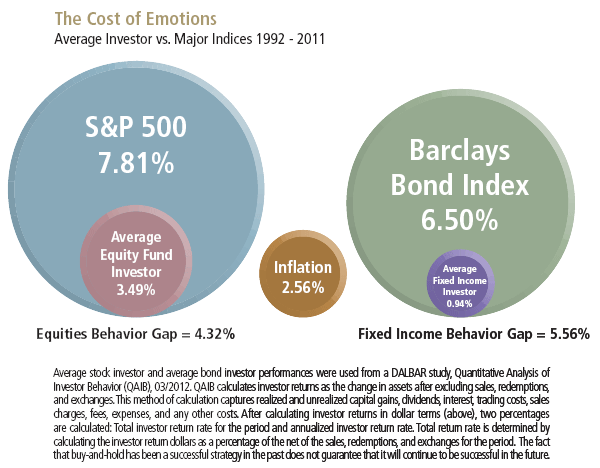
He then had the gall to call me back and ask whether I think he is paying too much for his new advisor. Here is what he said.
My advisor puts me in low cost ETFs and meets with me every quarter. But otherwise he does nothing with my portfolio, so what exactly do I pay him $15k for?
I know this gentleman has a sizable portfolio, and $15k means a fee of well below 1%. So I told him what I thought.
-
The fee is very competitive.
-
The advisor did the right thing by putting his money in low cost EFTs.
- Doing nothing with a portfolio is the only right thing to do!
Share this:
 If you are a typical investor, given the choice between investing in a small cap value fund or a large cap growth fund, which one would you choose?
You would probably go with the large cap growth since “large cap” sounds a lot safer than “small cap,” and “growth” sounds a lot more promising than “value.”
To prove how wrong you are, I did a study of the relative performances of these two styles in the eight decades between 1931 and 2010. Here is what I found.
Firm | Youtube | Facebook | Twitter | LinkedIn | Newsletter
Share this:

 A few days ago, I interviewed Jim Ludwick using Google+ Hangout On Air (HOA.) This is the first time I’ve interviewed an expert live on air! Feel free to laugh as you watch me stutter and trip over my words left and right.
Jim is the owner of MainStreet Financial, he used to be an agent at NY Life. Now he is a licensed insurance advisor.
I did not waste his appearance and got right down to the nitty gritty. I asked about a client case during the interview. Specifically, this client of mine was talked into 1) buying a universal life insurance inside her defined benefit plan, 2) buying a whole life insurance policy for her young daughter, because “it’s a great investment” according to the agent’s illustration of 8% growth.
I asked Jim three questions:
Share this:

 I go to great lengths to meet with my clients regularly. For instance, many of my clients live across the country. I fly to them.
Some might ask: what value is there in meeting regularly? There can be about $100k of value in it, let me tell ya!
Meeting regularly allows me to uncover hidden issues and potential opportunities, thereby helping my clients make smart financial decisions.
Firm | Youtube | Facebook | Twitter | LinkedIn | Newsletter
Share this:

 A client of mine is trying to get his money out of an ill-conceived investment. I want to share this with you so you don’t make the same mistakes.
In 2009, he had a windfall of $1m. He asked a lady who had sold him a bunch of annuities where he should put his newfound cash. He further told her he was already up to his neck in annuities so he wanted to take some risks.
The agent pointed him to a celebrity business. Basically, some hollywood celebrity was trying to start an online gaming business, and needed $30m to do so.
My client went to their presentation and was mesmerized by the income projection. Then, when he saw that one of his relatives was a minority partner in the venture, he was totally sold. He signed a check for $1m on the spot.
He might as well have flushed it down the toilet.
Here is what he did wrong.
Firm | Youtube | Facebook | Twitter | LinkedIn | Newsletter
Share this:


It is well established that investors’ sense of risk reward is shaped by immediate past experience.
However, investing based on immediate past experience is like driving while only looking through your rear view mirror. It’s a disaster waiting to happen.
The proper way to think about risk reward is to see investing as a risk taking occupation. When there are more job openings than job seekers, wages will rise. When there are many job seekers chasing too few openings, wages will be lower. It’s just simple economics.
In academic circles, this wage of taking risk is called risk premium.
Firm | Youtube | Facebook | Twitter | LinkedIn | Newsletter
Share this:

 1. ThinkAdvisor highlighted a Maryland study which showed that states which pay the highest fees to Wall Street (for managing pensions) have the lowest returns. That says it all about Wall Street. No wonder Rick Ferri wants you to steer clear of actively managed funds.
2. Reuters Money reported how Health Savings Accounts (HSAs) can be used as retirement savings accounts. This information is especially useful for small business owners and self-employed individuals who tend to neglect their retirement savings and face high deductibility in their health insurance. Here is the garden variety of ways they can save for retirement.
3. DIY Investor Robert Wasilewski encountered a bear while hiking. He survived to write about it, but he mused that the same reactions that kept him in the gene pool will surely “eliminate you from the investment pool.”
Firm | Youtube | Facebook | Twitter | LinkedIn | Newsletter


