My Experience of German Spa
Posted on: September 22, 2023
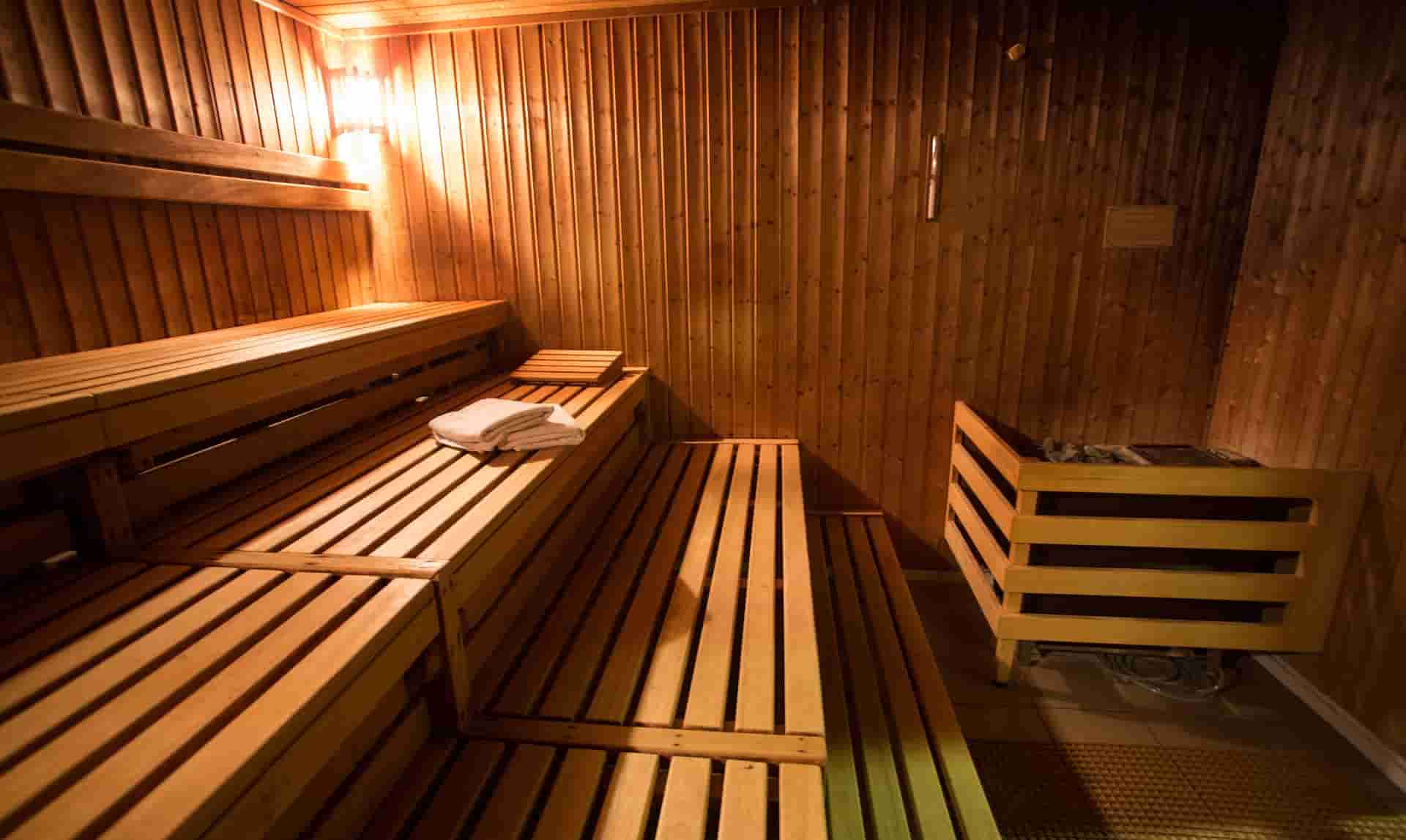
In the last three or four years since my family moved to Germany, I have slowly adopted some German health practices that might be considered unusual in America. One of these is regularly going to the Spa.
A German spa usually consists of several (dry) Sauna rooms all set at different temperatures, at least one steam room, several ice water pools, and basins to wash your feet. A German spa is a great place to subject my body to a bit of stress. I have reaped tremendous health benefits since what doesn’t kill me makes me stronger.
Heat Stress
Spas in Germany usually have a Finnish sauna room. In these rooms the going temperature is usually 90 degrees celsius. Every so often an Aufgussmeister (water pouring master) will bring a scented bucket of water and pour it on the red hot stones. The steam rises from the stones and the Aufgussmeister then does a dance to push the steam toward the patrons in the sauna room, all of them sweaty and naked. For a moment, the temperature in the room can reach 100 degrees celsius. My entire body was under heat stress. It’s said that sitting in such a sauna room for 15 minutes is like sprinting for 15 minutes straight.
Read the rest of this entry »Share this:

The Wealth of A German Doctor
Posted on: August 19, 2023

Last year on a train trip in Germany, I got to know a retired German doctor and we became good friends. When I travel to Germany to see my children, sometimes he invites me to stay at his home. He lives in a very humble place, a one-bedroom apartment with a monthly rent of about $700. When I stay with him, I coachsurf in his living room since he does not have a guestroom.
Out of professional interest, I asked him about his income during his working years and how he provided for his retirement security. As an internist, he made about $100k a year. He does not receive the German national social security income. Instead, his pension is currently provided by a doctor’s association he belongs to. This pension pays him about $60k a year. He has no real property to his name, other than an old beat-up VW.
He lives in the Rhein River area near a train station. The two banks of the Rhein river are not only picturesque but also historical – dotted with old castles. Every morning he wakes up at 5 and takes a 30 minute train ride to hike his favorite mountain. He arrives back home around 9 am to have a breakfast of coffee and German brot (bread). I joined him once, and the hike was strenuous, lasting for a few hours.
Read the rest of this entry »Share this:

Stock market sentiment refers to the overall sentiment of investors towards the stock market. This sentiment can be either positive or negative, indicating whether investors are optimistic or pessimistic about the future direction of the market.
There is a lot of evidence that stock market sentiment is a contrarian indicator of future market returns. Let me cite a few recent examples.
- When Covid hit the US in March of 2020, the entire market was gripped with fear and there was panic selling. Since then, however, the market has nearly doubled.
- In February of 2022 when the Ukraine War broke out, European markets also experienced panic selling. It was rumored that billions upon billions of dollars were moved from Europe to invest in the US market. Who would have thought that by the end of 2022, European markets would have higher returns than the US market?
- In March of this year, the US experienced two of the largest bank collapses in history. Some of my clients sent me doomsday articles and asked me if they should pull all their money out of the market just to be safe. Since then, the market has gone up around 20%.
In fact, this phenomenon has been rigorously studied. The chart below details the research results of Harvard Professor of Business Administration Malcolm Baker and NY University Nomura Professor of Finance Jeffrey Wurgler. Here you can see that across all market capitalizations (that is regardless of large stocks or small stocks) the negative sentiment leads to better subsequent one-year returns than the positive sentiment.
Read the rest of this entry »Share this:

How My Mom Was Scammed
Posted on: June 20, 2023
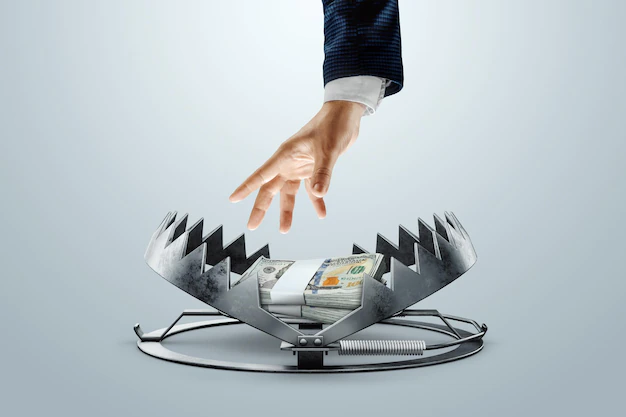
This article is a sequel to my last article about how my mom was introduced to a “great” investment opportunity by someone she trusted in her church. If you have not read that one, read it first. At the end of the article, I asked my readers to guess how much money my mom got back.
Here is the answer: she lost more than 90% of her money.
In the first three months after she “invested”, she did receive the promised 3% monthly interest on time. No doubt she shared her good experiences with others and may have even encouraged others to “invest.” She was then persuaded to reinvest all her interest income to make her money grow even faster. After a few months, the so-called brother in Christ stopped coming to church and seemed to drop off the face of the earth. In the end, my mom got just 9% back out of about $50k she invested. My mom is not uneducated, she was an OBGYN doctor. She still fell for the scam. So today I want to discuss the telltale signs of judgment manipulation by scam artists.
Trust shortcut
Trust is extremely hard to build. It takes years to earn a stranger’s trust. But scammers are experts at winning trust. Here are some of the trust triggers they like to pull:
Read the rest of this entry »Share this:


It happened when she still lived in China. One day she telephoned me, saying that a friend from her church told her about a fantastic investment opportunity. A brother in Christ had an ingenious business idea; he would buy water ponds, set them up for fish farming and sell his daily yield to restaurants for profit. He promised great returns. To get it going, he needed to borrow money with an annual interest rate of 36% (or 3% monthly.) He also wanted to keep this lucrative opportunity exclusively for fellow believers. My mom’s friend further testified to her that she had invested $10k and had already received her monthly interest, which she promptly invested back into the enterprise upon advice of this fellow Christian.
I told my mother to stay away from such a scheme since it made neither economic sense nor incentive sense – see my previous article.
My mom countered with these arguments:
Read the rest of this entry »Share this:


I got a message from a physician client of mine who wanted me to evaluate a real estate deal that was supposed to give him a 32x Return in 10 years, tax free. Note that the promised return is not 32%, but 32x, meaning that if one were to put in $400k today, he would get back $12.8mm in ten years. The proprietors of the deal explained it in a 90-minute long video message that was uploaded to a popular video platform. The proprietors further shared that there were only very limited spots left for investors to take advantage of this awesome opportunity.
Let’s ignore the “tax free” claim for now, since that usually has to do with investments in qualified opportunity zones, about which I have previously written an article. For now, I am primarily interested in thinking through the economic possibility of achieving the 32x return. The video explains that they double their money every two years by investing in multifamily units. (Buy and renovate for $400k, then sell for $800k.) By compounding their income over five two-year periods, or ten years, they achieve a 32x return. It’s simple as that. The proprietors have done it themselves, and the wife of one of them is a mathematician – she has confirmed the compounding formula: 2^5 = 32.
Now I am not a real estate expert, but this level of returns does not make economic sense to me. Here is how I explained my misgivings to my client.
Read the rest of this entry »Share this:


I must admit that I used to have a very weak immune system. Every year during flu season, I usually caught the flu twice. While others would get well within a week, my flu symptoms lasted for weeks. The worst part was the endless coughing, all day and night. Not only could I not get good sleep, I also coughed so much that my ribcage hurt. I couldn’t have imagined that I could cure all of that simply by taking cold showers.
I started doing that the year before the Pandemic. Throughout the subsequent two years, while Covid raged through the world, I had to travel frequently between Europe and America since my kids live in Germany. I saw my friends fall ill with Covid one by one, and then all my immediate family fell ill, not once but twice. All throughout that frightening time, I never got sick from Covid, or the cold, or the flu. I have to give the credit to cold showers.
Read the rest of this entry »Share this:


Today I had a conversation with a friend of mine who recently participated in a conference with the mayor of Washington, DC regarding the dire state of the office rental market. The bottom line is that people love working from home, they are not coming back to the office after the Pandemic as initially expected. This means that companies and even government branches are not renewing their office space leases. The ones that do need a much smaller footprint. Developers are considering converting office spaces into residential homes, but that’s easier said than done since office buildings are constructed differently.
On top of that, most real estate companies use debt financing and since last year, the financing cost has skyrocketed, thanks to the Fed. They are really caught between a rock and a hard place.
Read the rest of this entry »Share this:


Ten years ago, I was overweight, my blood lipid profile was quite messed up, with my triglyceride and cholesterol several times the normal level, I was pre-diabetic, my attention was short, my memory was failing, and I got hungry and dizzy easily.
I tried everything I could think of to remedy the situation. I took medicines and played sports. I tried diets like juicing, vegetarianism, calorie restriction, and many others, all to no avail. Then an acquaintance shared with me that intermittent fasting (IM) had worked magic for her. I decided to give it a try.
My initial attempt was rather tentative since I was really afraid of hunger. When I was hungry, I got so dizzy that I felt like I could pass out. When that happened, I needed something very sweet like ice cream to bring me back.
The first change I made was simply to have breakfast one hour later than before. That way, the hunger I felt was totally bearable. Within a month, I had made so much progress that I could combine my breakfast and lunch together and just have brunch. That’s when I started two meals a day (TMAD).
Read the rest of this entry »Share this:

Three weeks ago, in the middle of the Silicon Valley Bank saga, some of my clients got really panicky because they read predictions that we would soon see a total banking system collapse.
At the time, I advised sitting tight and, if indeed the market should fall, using this chance to buy durable assets at a discount. I know full well how messed up the system is, but I also know that as long as the US dollar remains the world currency, there is unlimited ammunition to deal with the problem. We are not Zimbabwe or Argentina.
And that is exactly what happened (see the Fed balance sheet here.) In the three weeks since the SVB collapse, the Fed has printed nearly $400B of new money, reversing 2/3 of the tightening we have seen since March of 2022. In other words, since the Fed decided to fight inflation in March of 2022, about $600B has been unprinted (this compared to $5T that was printed after the Pandemic.) However, in just a short three-week time, $400B was printed to rescue weak banks.
Read the rest of this entry »Share this:


In this article, I will not discuss the Credit Suisse collapse and rescue that just happened less than ten hours ago, since I don’t understand the Swiss banking system as well as I understand the US system. Here in the United States, we have had a rapid succession of specialty bank collapses: Silvergate Bank, Silicon Valley Bank (SVB) and Signature Bank. Most of their depositors are super wealthy people or businesses whose deposits amount to much more than the 250k guaranteed by the FDIC. The majority of American banks do not have that kind of customer profile and the majority of American depositors have less than $250k in their bank accounts. Does that make the rest of the banks in America safe? I am afraid not.
Though the depositor profiles may be different, all banks invest in the same “safe” government or government-backed debt securities, and all banks have unrecognized losses in those securities. By some estimates, the entire US banking system has $660B in unrecognized losses.
Read the rest of this entry »Share this:


There is so much to write about the Silicon Valley Bank (SVB) collapse and the subsequent government rescue plan. Let me start by saying that I do agree that the government’s action has arrested a panic that could lead to a domino of bank collapses. In today’s article, I’d like to present my thought that the rescue mechanism as it is now could lead to more problems down the road that one day might become an even bigger crisis.
Read the rest of this entry »Share this:

During 2020 and 2021, the Fed printed $5T to combat a potential economic collapse caused by Covid 19. Some of this newly minted money found its way into Silicon Valley Bank (SVB) deposits. Since the short-term interest rate at that time was essentially at zero, SVB invested a large portion of the money into long-maturity mortgage-backed securities (MBS) that at the time were at least yielding somewhere around 1.6%.

If we look at the SVB Balance Sheet, this investment is classified as Held-to-maturity securities on the asset side (shown in green.) This means if they hold the securities until maturity, they will definitely not lose money. But if they are forced to sell before maturity in a rising rate environment, they will lose money.
Read the rest of this entry »Share this:


Last month, I wrote about how my father is 6 years older than my mom but he looks and moves like he is 30 years younger. This just shows how our calendar ages do not always reflect how old we actually are, or how fast we age. Luckily, there are services out there that can help us figure this out.
These tests are usually called biological age tests. They often involve taking a blood sample, a saliva sample or even just a cheek swab, and analyzing it to determine a person’s biological age. The method by which they determine this can fall into two camps as well, either the phenotypic method or the methylation method. One looks at your biomarkers which correspond to biological age, the other looks at your epigenetic information to determine how old your DNAs are.
Read the rest of this entry »Share this:

Two months ago I wrote about the top ten reasons that Equity Index Annuities are ripoffs, but apparently I did not exhaust all possible ways an insurance company can get at your money. Recently, a client of mine asked me to review an EIA he bought two years ago. Oh my goodness! I have had my eyes opened and my heart disgusted once again!
The contract I looked at for my client put his money in a so-called “1 Year Average Participation Index Account” with an initial participation rate of 30% and a minimum participation rate of 10%.
Injury #1: With all EIAs, you give up the dividend, which is about 2% a year. So you need to plan to give up 20% in ten years and 40% in 20 years.
Injury #2: This injury stems from the word “average.” Let’s say in a given year, the market goes up 10%, you are not getting this 10% growth, you are getting the “average” growth. You have to read the whole contract to understand what a ripoff this term is. Let’s assume that in January, the market goes down 1%, and in subsequent months, the market goes up 1%. So adding all the gains together, for the whole year the market goes up 10%. The way they do the average is this: for every month, they will calculate the Year to Month Return, and then average them. The effect of this is to cut the annual return number by half. In a year the annual return of the market is 10%, after the insurance company applies their “average”, the return becomes 5%. See the table below for an illustration.
Read the rest of this entry »Share this:

“The January Effect” refers to two phenomena in the stock market that elude good explanation:
- The market tends to perform exceptionally well in January.
- The market’s January return tends to predict the rest of the year. That is, if we have a good return in January, it is more than likely that we will have a good return for the whole year.
In recent years, however, people have been saying that the January Effect is weakening. So today I am going to revisit these two phenomena using the S&P 500 return data from the last 10 years. In the table below, I calculated the January returns (and the annual returns) from 2013 to 2022 and arranged them from the lowest to the highest.
Read the rest of this entry »

