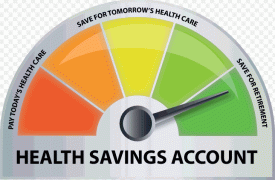
 Just this week I get an email from a client of mine asking me if she should contribute to her HSA (health saving account) and if so, how much. So I thought this would be a good time to talk about HSAs.
What is a HSA?
A HSA is a tax-advantaged savings account for health care purposes for folks who enroll in a qualified high-deductible health plan (HDHP.)
HSAs were brought about by President George W. Bush in the same legislation that added prescription drug benefits to Medicare. It was established without much fanfare because at the time all the sound and fury was about the prescription drug benefit. Little did we know that one and a half decades later, it would be becoming more and more popular in the corporate health insurance marketplace.
How does it work?
Share this:

 Many successful families use irrevocable trusts for tax mitigation, wealth transfer and asset protection. In the last few articles, I discussed how an investor with a concentrated highly appreciated position can use a irrevocable charitable remainder trust to diversify concentrated risk, save taxes and benefit a charitable cause.
The caveat with irrevocable trusts is that granting families have to give up a measure of control. The trouble is that many families give up too much control than they need to. The result: they potentially put their goals at risk.
A physician client of mine created a irrevocable life insurance trust (ILIT) years ago to benefit his children. He named his sister, who loved his kids, as sole trustee. Unfortunately over the years, they became estranged and now she does not even return his calls. His trust is effectively in limbo.
What could he have done to avoid this situation?
Share this:

 After my last article, “How to Deal with ConcentratedHighly Appreciated Position,”a reader asked me exactly how much he can save in taxes.
I’ll use him as an example. He owns an investment property that he bought many years ago for $200k that is now worth $800k.
If he sells his investment property outright, he will need to pay a capital gain tax of the amount (800-200)*20% = $120k.
He can set up a CRT (charitable remainder trust), put the property in it , so when he sells it, the capital gain tax is exempt. That’s a savings of $120k right there.
But does he need to give all of that to charities? The answer is no. In fact he can take out money from the trust for his personal use.
Depending on how he takes out money, a CRT can be either a CRAT (charitable remainder annuity trust) or a CRUT (charitable remainder unit trust.)
Share this:

 After my last newsletter article “Top Ten Reasons to Avoid Exchange Funds” went out, I got an email asking how to deal with a concentrated highly appreciated stock position. To this, I replied, “It helps to have some charitable inclination.”
If you have no charitable inclination, no amount of gimmicks can get you off the hook of paying the huge capital gain taxes. At best, you can pay a hefty fee to have someone kick the can down the road by using exchange funds.
However if you are charitably inclined, then a charitable remainder trust (CRT) is a great tool to save on taxes, reduce undiversified risk, create income and benefit charities.
What is a CRT?
A CRT is a trust that lets you convert convert a highly appreciated asset like stock or real estate into lifetime income. It reduces your income taxes now and estate taxes when you die. You pay no capital gains tax when the asset is sold. And it lets you help one or more charities that you care about.
Share this:

 A few days ago, I was approached by an employee of Nvidia regarding his $5mm worth of NVDA stock. A Morgan Stanley broker had pitched him the idea of using exchange funds to diversify his holdings and he wanted my second opinion.
If you are an employee of any of those high flying tech companies like Amazon, Facebook, Google, Apple, Microsoft, Netflix, and etc., you are likely to have been pitched such an idea. Talk to me before you execute anything.
So what exactly are exchange funds? Exchange funds are unregistered private-placement limited partnerships or LLCs designed specially for investors with concentrated positions in highly appreciated stocks to help them diversify without triggering taxes.
How do they work? Investors transfer shares of their concentrated stocks to the fund in exchange for an equal value of units of the fund. These transfers are not taxable since they are considered partnership capital contributions under the tax law. There are a few caveats to the law though: investors have to stay in the fund for a minimum of seven years and the fund must invest 20% of its capital in illiquid assets.
Share this:

In my last newsletter I discussed the profitability premium. It, along with the small cap premium and value premium, form the three established directions whereby investors can improve their expected returns on their stock investments.
To be more specific, to improve expected returns, an investor should tilt their portfolio towards profitable companies, small cap stocks and value stocks.
However, one must keep in mind that return premiums are not certainties. There will be periods, sometimes rather extended periods, during which:
- Small cap stocks underperform large cap stocks
- Value stock underperform growth stocks and
- Profitable stocks underperform unprofitable stocks
Share this:

Ever since Fama and French published their seminal paper “The Cross-Section of Expected Stock Returns” in 1992, the world (at least the academic world) has come to understand that over the long run, small cap stocks outperform large cap stocks and value stocks outperform growth stocks.
This quest to understand stock returns has not stopped. In 2013, Robert Novy-Marx published “The Other Side of Value: The Gross Profitability Premium” in the Journal of Financial Economics. In the course of this research, he discovered that profitability, measured by gross profits-to-assets, has roughly the same power as book-to-market in predicting the cross-section of average returns. Profitable firms generate significantly higher returns than unprofitable firms, despite having higher valuation ratios.
Almost concurrently, other researchers confirmed Novy-Marx’ discovery, notably Fama and French’s new paper “A Five Factor Asset Pricing Model” and Hou, Xue and Zhang’s “Digesting Anomalies: An Investment Approach.” Both papers were published in 2015.
Unlike the small cap premium and value premium, the profitability premium does not have a satisfactory risk-based explanation.
Share this:

Early on the morning of May 13, President Trump tweeted:
“President Xi of China, and I, are working together to give massive Chinese phone company, ZTE, a way to get back into business, fast. Too many jobs in China lost. Commerce Department has been instructed to get it done!”
What?!?!?! Trump wants to save Chinese jobs? To say that I am caught by surprise is an understatement.
Let me give you a little background just in case you don’t pay attention to the news (God Bless You!)
When ZTE was caught selling telecom equipment to Iran and North Korea in 2016, they entered into a plea agreement with the US commerce department (Obama administration) that included the following stipulations:
-
They will pay a $1.19 billion fine, the largest fine ever paid by a company.
-
They will fire the four executives involved.
-
They will discipline the 35 employees involved.
Fast forward to May 2018, just before the US trade delegation headed over to Beijing for negotiations, the US commerce department announced a 7-year ban on component exports to ZTE because they did not carry out the third stipulation of the plea agreement. It turns out the 35 employees were not disciplined, they were given their 2016 year-end bonus!
Share this:

The following is the content of my June 2012 newsletter. It’s still very relevant today.
As I am writing this, the markets are falling like a rock. The Dow has entered negative territory for the first time this year; Nasdaq, which was up 20% a mere two months ago, is up only 5% for the year. The S&P 500 has lost close to 10% of its value since its April 1 peak.
I wrote the above paragraph using typical financial press lingo. This type of language has the tendency to cause amygdala hijack.
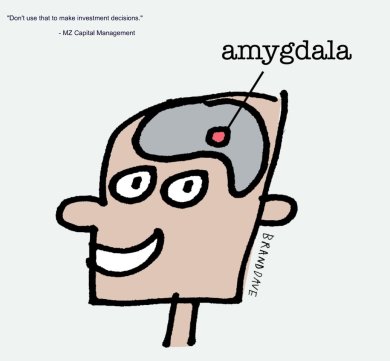
The amygdala is a part of our brain that processes threats. When we perceive a threat, the amygdala takes over the whole brain. fMRI scans show that blood supplies are Read the rest of this entry »
Share this:

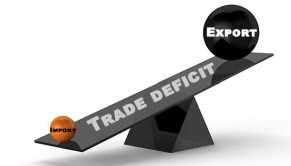 In 1971, Nixon ended the gold standard and since then the US has been consistently running a trade deficit. The US has not gotten poorer but instead has benefited tremendously from trade deficits.
Prior to that time, foreign holders of dollars could redeem the money in gold and ship it out of the country, resulting in the loss of national wealth. That’s why prior to 1971, the US generally had a trade surplus.
After the ending of the gold standard, the US dollar became a fiat money that can theoretically be printed at will. When the trade deficit with China was $350 billion last year, what it actually meant was that China sent us $350 billion worth of goods, and we gave them our printed paper(fiat money dollar) in exchange. The USA is the only country that can do that because the dollar is the world currency! I suspect China is secretly envious of our position. Read the rest of this entry »
Share this:

Trade War Started. What Do We Do?
Posted on: March 26, 2018
 Let’s start with some basic facts. As of 2017, the US imports goods worth about $550 billion from China, while only exporting about $175 billion to China. The trade imbalance is about $375 billion in China’s favor. President Trump believes China is making off with $375 billion of the US’s money every year and he is out to stop that. He announced tariffs on $60 billion worth of Chinese goods yesterday, mostly targeting high-tech imports from China.
The biggest high-tech import item from China is … round of applause …the iPhone, totalling about $70 billion a year since China is the final assembly place of all iPhones using parts from Japan, Korea, Taiwan, the US and China.
If an iPhone sells for $1000 in the US, it is counted as $1000 worth of Chinese imports, but 60% of all its economic value is captured by Apple. China probably captures less than 10% of the economic value. The rest is shared primarily by Japan, Korea, Taiwan. A tariff on the iPhone will harm Apple more than China, and also hurt Japan, Korea and Taiwan along the way.
Share this:

Ameriprise Caught by SEC! Now What?
Posted on: March 2, 2018

It just caught my attention today that buried deep in the CNBC website was this headline:
Ameriprise Puts Retirement Savers at Disadvantage in High-Fee Funds, Says SEC
As the consequence of getting caught, the billion dollar company agreed to pay a fine of $230,000. If this is not a slap on the wrist I don’t know what is. Is it going to deter Ameriprise or any other brokerages from ripping off their clients? Nah, I don’t think so.
In a statement, Ameriprise pointed out “… It’s important to note that this is a long-standing industry topic and numerous firms have settled with SEC and FINRA on similar matters.”
This is actually a very honest statement that makes it clear that the dishonest practice of costly hidden fees is quite prevalent in the industry. I only take issue with their use of the word “topic” as if no harm has been done.
Share this:

If you go to the Morningstar website to do research on a very popular fund, the Vanguard S&P 500 Index Fund or VFINX, you may find this information after some digging around:

The Investment Return is basically what the fund produces. (If the fund is a S&P 500 Index fund, then its investment return is basically synonymous to what the market produces.) The Investor Return is what the average fund investor receives. So why on earth would the typical investor get less than half of what the fund produces?
The answer is actually pretty simple: most investors just don’t have the mental wherewithal to stay in the market when it drops. They pulled out at the bottom of the market, thereby missing much of the rebound rally in 2009. See this fund flow chart below.

Share this:

I Am In The News For This …
Posted on: January 16, 2018
- In: Life
- Leave a Comment

DC Metro Theater Arts, the largest performing arts publication in the Mid Atlantic region, just did an article about the upcoming improvised musical show I am producing in Bethesda. Tara and Rance, the two performers from Chicago, deservingly got the lion share of coverage, but the publication did say this about me:
Their upcoming show at Imagination Stage in Bethesda will be their first in that venue and in Maryland. This opportunity landed on their radar through Michael Zhuang, a resident of Bethesda, nicknamed “The Investment Scientist” for his founding of MZ Capital Management. Mr. Zhuang has traveled the world and spent countless hours researching, studying, and practicing his love of musical improv. In 2017, he began sponsoring up-and-coming talent from the improv-comedy meccas of New York City and Chicago to perform locally, with the goal to embed musical improv into the fabric of Bethesda’s growing arts and entertainment culture.
“My vision is to see Bethesda’s performing arts scene flourish,” said Zhuang.
Share this:

Happy 2018! Unforgettable 2017!
Posted on: January 2, 2018
- In: Life
- Leave a Comment
-
I published my first book “Physician Wealth Management Made Easy” and it got off to a strong start. It was Amazon’s #1 Hot Release in the Physician category for a month.
-
I auditioned and was accepted into the cast of the DC production of the Broadway musical, Chess. I even got to sing five lines of solo in the opening scene, “The Story of Chess.”
-
My business grew 33%. Now $100mm AUM is within reach. I was also recognized as one of Top 100 Influential Advisers by Investopedia on strength of my knowledge
contribution.

-
I performed an improvised musical format called Spontaneous Broadway at San Francisco’s Bayfront Theater. I also performed an improvised musical solo at the Source Theater in DC.
Share this:

Bitcoin $10,000: My Two Cents
Posted on: November 29, 2017
 The Origin
Bitcoin was invented by a Japanese man named Satoshi Nakamoto. Or was it? He has been in radio silence since 2011, and nobody has seen him or has been able to verify his existence. To say the least, the origin of Bitcoin is shrouded in mystery.
The Technology
The underlying technology of Bitcoin is called Blockchain. It is legitimate and it is being adopted by companies as diverse as Alibaba and Walmart. The technology ensures high security and prevents counterfeiting. However, the technology is in the public domain, meaning that anybody can create an alternative to Bitcoin. In fact, there are more than 1300 “cryptocurrencies” out there as I write this.
The Early Adopters
The early adopters of Bitcoin were anarchists who hate governments and who think fiat monies issued by governments are just means for control and wealth expropriation. They like the fact the Bitcoin is not issued by any governments and is not managed by any “trusted” third party.
The Next Adopters
Money launderers and criminals were the next adopters of Bitcoin because it is anonymous and untraceable.

 The Investment Scientist